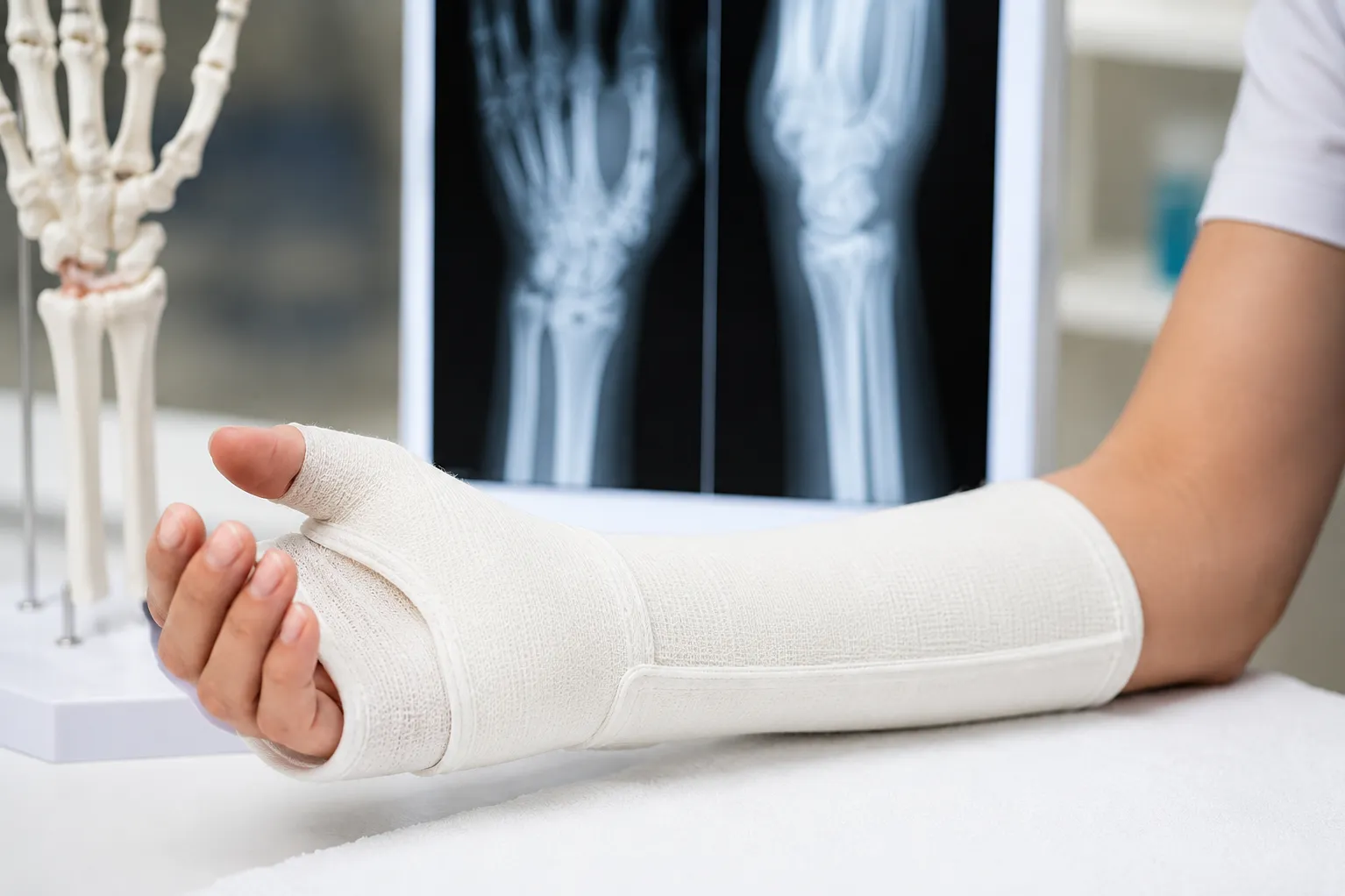
A fall onto an outstretched hand can produce considerable force at the wrist. One common result is a distal end radius fracture, which occurs near the wrist end of the radius, one of the two major bones in the forearm.
These fractures can affect people of different ages. They may occur after sports injuries or road accidents in younger adults, while relatively minor falls can sometimes cause fractures in older people with reduced bone strength.
How Can You Recognise a Wrist Fracture?
Symptoms usually develop immediately after injury and may include:
- Wrist pain and tenderness
- Rapid swelling
- Bruising
- Difficulty moving the wrist
- Pain when trying to grip something
- Visible change in wrist shape in displaced fractures
Not every fracture produces obvious deformity. A wrist that appears relatively normal may still contain a fracture, particularly when pain and swelling continue after a fall.
Why X-Rays Are Important
Clinical examination helps identify the likely area of injury, but imaging determines the fracture pattern and alignment.
X-rays can show whether the bone has remained in a satisfactory position or whether fragments have moved. The fracture may also extend into the wrist joint, which can influence treatment decisions.
Does Every Distal Radius Fracture Need Surgery?
No. Stable fractures with acceptable alignment can often be managed without an operation using immobilisation in a splint or cast, followed by appropriate monitoring.
Surgery may be considered when a fracture is significantly displaced, unstable, involves the joint surface in a problematic way, or cannot maintain satisfactory alignment after reduction.
The treatment decision depends on several factors rather than one X-ray feature. Age, hand dominance, occupation, bone quality, activity level, associated injuries, and overall health can all matter.
What Happens During Recovery?
Bone healing takes time. Follow-up imaging may be recommended to ensure the fracture remains appropriately positioned.
Once adequate healing has occurred, stiffness can become a significant concern. Rehabilitation may include gradually restoring wrist and finger movement and later improving strength according to medical guidance.
Persistent numbness, increasing swelling, severe uncontrolled pain, changes in finger colour, or difficulty moving the fingers after an injury require prompt medical assessment.
For people seeking orthopaedic fracture care in Thane, Maharashtra, Ankur Hospital provides evaluation of musculoskeletal injuries under Dr. Amol A. Gharote.
Early assessment is particularly valuable after significant wrist trauma because the initial position and stability of the fracture can influence the treatment approach. Rather than assuming a painful wrist is merely a sprain, obtaining an appropriate examination can clarify the injury and establish a structured recovery plan.
Keywords