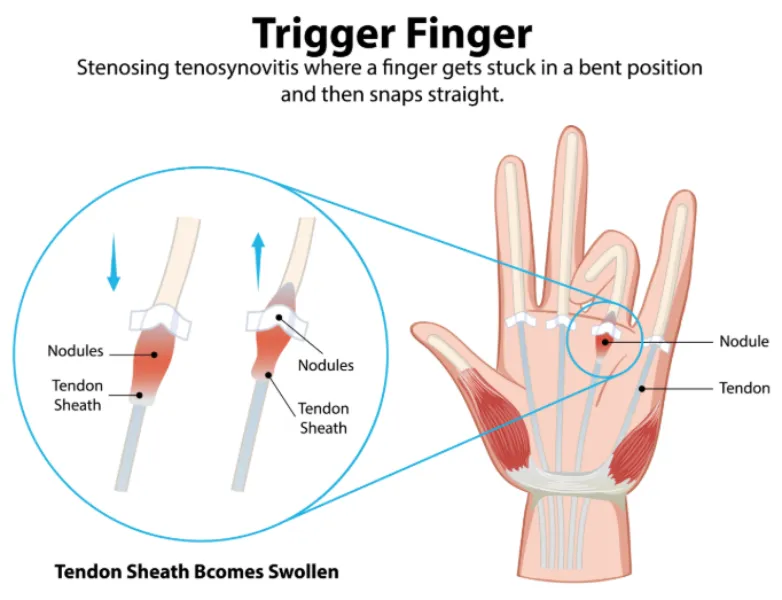
A finger that catches, clicks, or becomes temporarily locked while bending and straightening may be affected by trigger finger. Mild cases can sometimes be managed conservatively, but persistent symptoms may lead patients to consider trigger finger release.
Understanding when release is considered helps distinguish occasional finger discomfort from a mechanical problem that is significantly affecting hand function.
What Causes Trigger Finger?
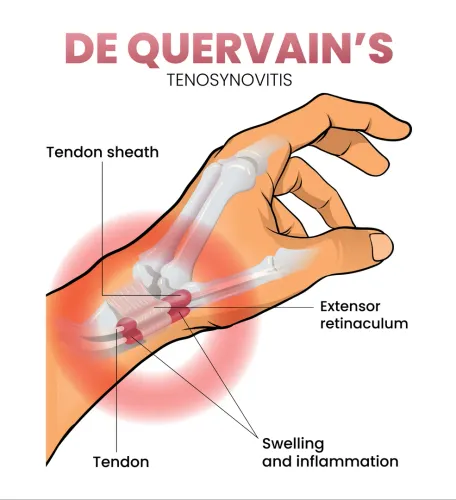
Finger tendons normally glide through a series of pulley-like structures. When the tendon or surrounding sheath becomes thickened or irritated, smooth gliding can become difficult.
This may produce:
- Clicking during finger movement
- Pain near the base of the affected finger
- Morning stiffness
- A catching sensation
- A finger that temporarily locks in a bent position
- Increasing difficulty straightening the finger
The thumb can also be affected, in which case the condition is often called trigger thumb.
Is Surgery the First Treatment?
Usually not in every case.
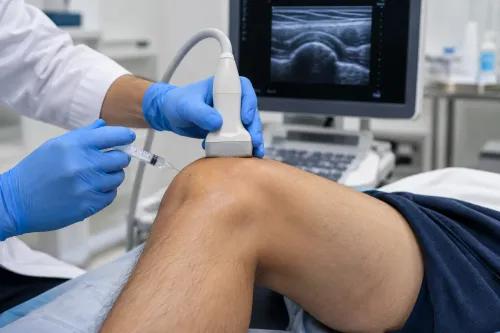
Treatment depends on symptom severity, duration, functional limitation, previous treatment, and individual health considerations. Initial management may include activity modification, splinting, medication, or injection treatment in appropriate patients.
When symptoms remain troublesome despite suitable conservative treatment, or locking becomes persistent and functionally limiting, release may be discussed.
What Happens During Trigger Finger Release?
The objective is to release the constricted pulley that is preventing the tendon from gliding normally.
The exact technique and anaesthesia depend on the patient's situation and the surgeon's assessment. Patients should understand expected wound care, hand use, movement exercises, and follow-up before undergoing the procedure.
Questions to Consider Before Choosing Surgery
Patients evaluating trigger finger treatment in Thane can ask:
- Is trigger finger definitely causing the symptoms?
- How severe is the condition?
- Which non-surgical treatments remain appropriate?
- Why is release being recommended now?
- What activity restrictions will apply afterward?
- When can work and routine hand use resume?
- Are there individual factors that could affect healing?
People whose occupations involve frequent gripping, tools, keyboards, machinery, or repetitive hand use may also need a practical return-to-work plan.
Ankur Hospital in Thane, with orthopaedic care provided by Dr. Amol A. Gharote, assesses hand and upper-limb conditions to determine whether conservative management or a procedure is appropriate.
Trigger finger release is not chosen simply because clicking is present. The decision becomes more relevant when symptoms persist, locking interferes with normal activities, and appropriate non-operative measures have not provided adequate improvement. A clinical examination can clarify the severity and help patients select the next step based on function rather than discomfort alone.
Keywords