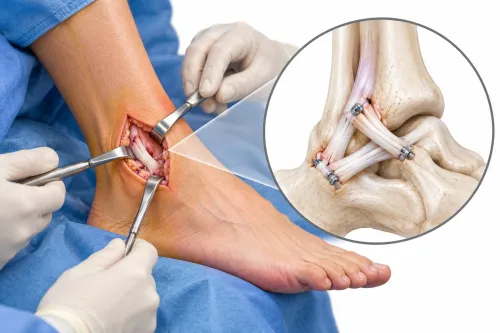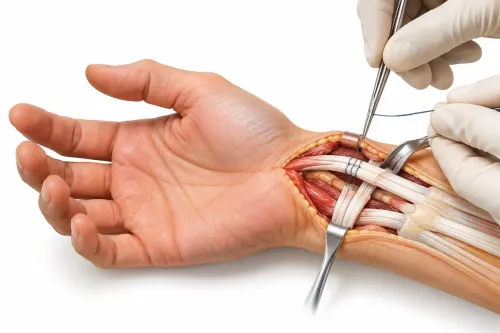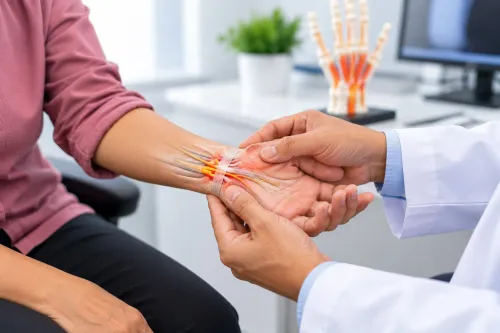
Pain, weakness, stiffness or repeated instability can make lifting, reaching, gripping and dressing difficult, but surgery is useful only when it addresses the specific structure causing the problem. By the end, you will know which improvements surgery may deliver, when non-surgical care remains the better choice, what procedure types are intended to restore, and how to prepare for assessment and rehabilitation.
Key takeaways
- Surgery helps when a structural problem prevents recovery with physiotherapy.
- The operation must match the damaged tendon, ligament, bone or joint.
- Assessment includes movement, strength, stability and imaging before treatment.
- Rehabilitation determines how safely strength and arm movement return.
What shoulder and elbow surgery can restore
Surgery can restore useful arm function when a structural problem blocks recovery: less pain, higher lifting and reaching, better joint stability, and greater independence with dressing, bathing, driving or work. The benefits of shoulder surgery depend on the damaged structure and its condition before treatment; a repair cannot guarantee normal strength or a pain-free joint.
| Problem or operation | Realistic improvement | Important limit |
|---|---|---|
| Rotator-cuff repair | Better elevation, reaching and lifting | Strength returns gradually and may remain reduced after a large or longstanding tear |
| Stabilisation or reconstruction | Fewer dislocations and greater confidence using the arm | Contact sport and heavy loading require staged clearance |
| Shoulder replacement | Less arthritis pain and improved useful movement | Anatomic replacement needs a functioning cuff; reverse replacement uses the deltoid when the cuff is irreparable |
| Elbow fracture fixation | Restored alignment, bending, straightening and arm use | Stiffness can persist despite correct healing |
| Elbow decompression or replacement | Less nerve pressure or joint pain, stronger grip and easier daily tasks | A completely normal range is not assured |
Real shoulder and elbow surgery benefits in Thane depend on follow-up physiotherapy and your ability to complete each rehabilitation stage. Expect improvement in function rather than an instant cure: supervised motion protects repairs, while aggressive stretching can worsen elbow tissues.
Before scheduling, confirm the movement goal, review dates, therapy supervisor, implant or fixation plan, and emergency contact route.
When surgery is a better fit than physiotherapy or observation
Surgery is justified when the diagnosis identifies a repairable structural problem and the arm still cannot perform important tasks after an appropriate non-operative trial. Pain alone is not enough: shoulder pain can come from the neck, frozen shoulder, arthritis, tendon disease or referred pain.
That trial may include:
- Medicines for pain and inflammation
- Activity changes that remove the provoking load
- An injection when it suits the diagnosis
- A brace for instability or protection
- Supervised physiotherapy with measurable movement or strength goals
A shoulder or elbow operation becomes a stronger option when symptoms persist despite that plan, or when delay risks a worse result. Examples include a full-thickness rotator-cuff tear with weakness, repeated shoulder dislocation, a displaced fracture, severe arthritis, nerve compression or major loss of arm function.
A sudden traumatic injury with inability to lift the arm or use the hand needs prompt specialist assessment rather than months of observation.
Ask what function the operation aims to restore: reaching overhead, lifting, gripping, bending or straightening the elbow, or keeping the joint stable. Elbow surgery often improves useful movement and pain rather than producing a completely normal range.
Before booking shoulder surgery in Thane, confirm the review schedule, rehabilitation supervisor, emergency contact route and any implant or fixation plan. Surgery cannot deliver its intended benefit if you cannot complete staged rehabilitation; returning to heavy activity before a repaired tendon heals can undo the repair.
Matching the operation to the movement problem
The movement you want back determines the operation. For elbow surgery in Thane, fixation is aimed at restoring bone alignment after a fracture; reconstruction targets instability; decompression targets pressure on a nerve. The procedure must match the structure preventing useful arm movement.
| Option | Main aim | Movement or strength it targets |
|---|---|---|
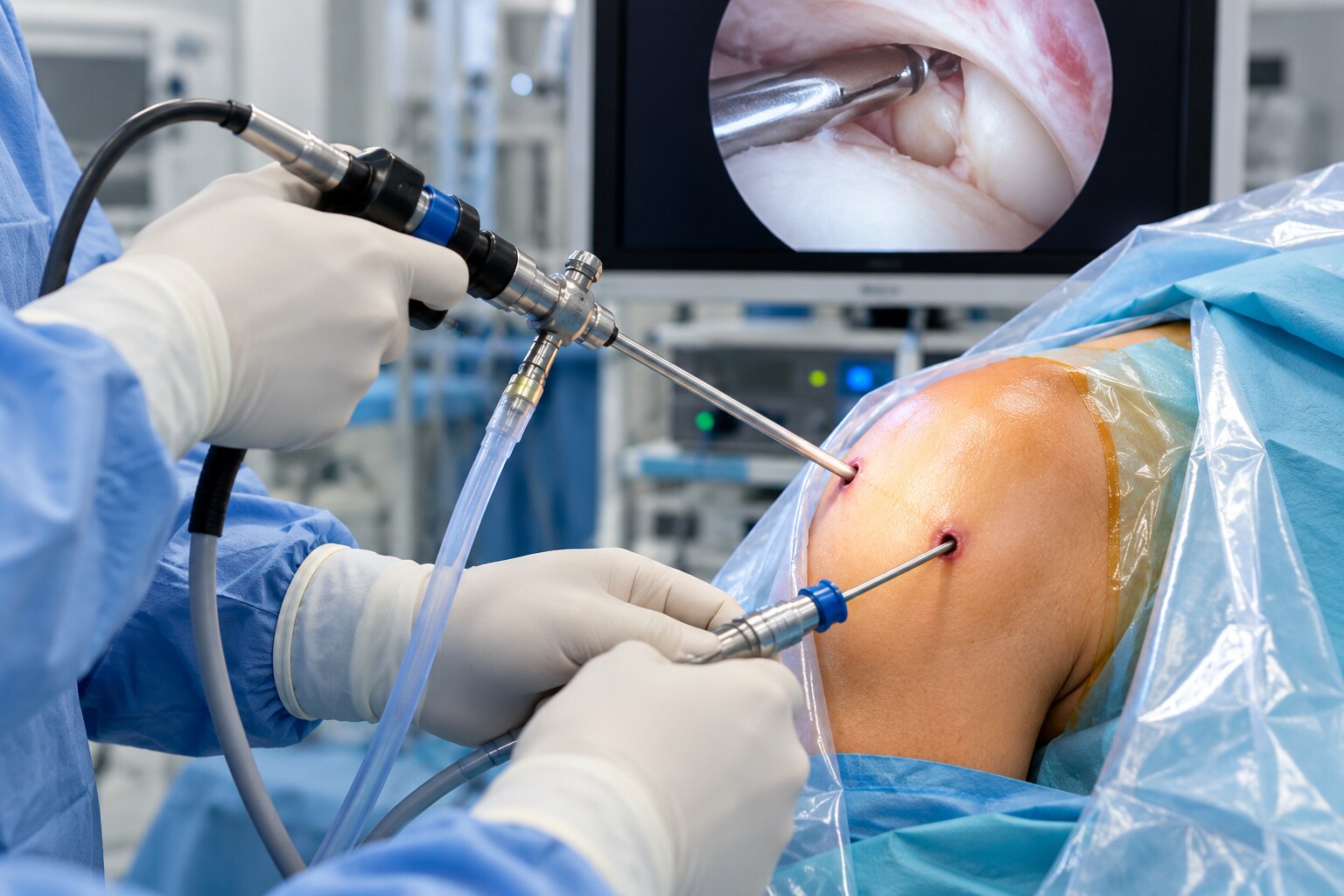
| Arthroscopy | Treat damage through small portals, such as a torn tendon, loose fragment or inflamed tissue | Smoother movement, less catching and improved lifting or bending |
| Open repair | Directly reattach or repair a torn tendon, ligament or muscle | Restored pulling strength, joint stability and controlled movement |
| Reconstruction | Replace a failed ligament or other stabilising structure with a graft | Prevention of repeated dislocation and safer reaching, throwing or weight-bearing |
| Fracture fixation | Align broken bone and hold it with plates, screws, pins or another device | A usable joint position, stronger loading and recovery of bending or straightening |
| Decompression | Release pressure on a nerve or crowded joint space | Better sensation, less nerve-related weakness and easier movement |
| Joint replacement | Replace severely damaged joint surfaces with implants | Less arthritis pain and more practical daily-use motion |
A shoulder replacement has an important distinction: an anatomic replacement needs a functioning rotator cuff, while a reverse replacement lets the deltoid elevate the arm when the cuff cannot be repaired. No operation guarantees full movement; stiffness, muscle damage, arthritis severity and rehabilitation determine how much function returns.
What assessment reveals before an operation is chosen
A painful shoulder or elbow is not enough to justify an operation. The assessment must identify whether the problem comes from the joint, tendon, nerve, neck or referred pain, then measure function and urgency.
- The clinician compares both arms, checks swelling, deformity, skin temperature, tenderness, active and passive movement, muscle power, grip, stability and sensation. Neck movement and nerve tests help expose cervical radiculopathy instead of a shoulder disorder.
- X-rays show fractures, dislocation, alignment, bone loss and arthritis. Ultrasound can assess some rotator-cuff tears dynamically; MRI shows tendons, cartilage, labrum and soft tissue, while CT defines complex fractures. The scan must answer a clinical question, not replace examination.
- Arrange routine specialist review for persistent loss of lifting, bending or gripping, recurrent instability, suspected tendon rupture, stiffness, or pain that continues despite appropriate activity changes and rehabilitation. Bring previous reports and a clear timeline.
- Seek emergency care after a major injury with visible deformity, an open wound, an arm that becomes cold, pale or blue, absent wrist pulse, or new severe numbness or weakness. A hot, swollen joint with fever needs urgent assessment for infection; sudden shoulder pain with chest pressure, breathlessness or sweating needs emergency evaluation.
Ask who will review the findings, what movement or strength goal is realistic, and which non-operative option remains before scheduling surgery. A sound plan links the diagnosis, imaging and rehabilitation capacity rather than promising full movement.
Rehabilitation, risks and choosing care in Thane
Protect the repair by treating rehabilitation as part of the operation. Wear the sling or brace for the prescribed period, keep scheduled reviews, and progress from protected movement to active motion and strengthening only when your surgeon or physiotherapist clears each stage.
Heavy lifting or premature stretching can damage a healing tendon and worsen elbow stiffness.
Expect trade-offs, not a promise of a normal arm. Risks include infection, bleeding, nerve irritation, stiffness, recurrent instability, tendon re-tear, and problems with plates, screws, or an implant. Seek urgent advice for fever, increasing redness or drainage, sudden swelling, new numbness, a cold hand, or pain that escalates sharply.
Before booking, ask for these specifics:
- The diagnosis and the movement or strength goal
- Non-operative alternatives and why they no longer fit
- The procedure, fixation or implant choice, and its main risks
- The sling or brace duration, physiotherapy stages, and return-to-work limits
- Review dates, therapy supervision, and an emergency contact route
| Plan element | Sound treatment plan | Warning sign |
|---|---|---|
| Diagnosis | Explains examination and imaging findings | Uses a vague label |
| Goal | Names measurable movement, strength, or pain aims | Promises full recovery |
| Recovery | Gives staged restrictions and review dates | Says “resume activity as tolerated” |
| Risk discussion | Covers procedure-specific complications | Avoids questions about failure |
A shoulder and elbow specialist in Thane should discuss these points in plain language and revise the plan if findings change. At Ankur Hospital - Dr. Amol A. Gharote, use the consultation to verify who will supervise therapy, not just which operation is proposed.
Related service
Shoulder and Elbow Surgery Dr. Amol Gharote is a dedicated Orthopedic Surgeon at Ankur Hospital, Thane East, providing expert diagnosis and treatment for a wide range of... View service → |
Frequently asked questions
What benefits can shoulder and elbow surgery provide?
Surgery can reduce pain, improve lifting and reaching, restore joint stability, and support daily activities such as dressing, bathing, driving and work.
When is surgery a better fit than physiotherapy or observation?
Surgery becomes a stronger option when a structural problem blocks recovery, symptoms persist despite appropriate non-surgical care, or instability and loss of function limit daily life.
How is the operation matched to the movement problem?
The procedure depends on the damaged structure, such as a tendon, ligament, bone or joint, along with the injury pattern and the condition of the tissue.
What happens before shoulder or elbow surgery is chosen?
Assessment reviews pain, range of motion, strength, stability and function, then uses imaging and clinical findings to identify the problem and compare treatment options.
Keywords