A torn ACL, repeated ankle sprain, ruptured Achilles tendon, or tendon laceration does not automatically mean you need reconstruction. By comparing the injury, examination findings, imaging, activity goals, tissue quality, and response to treatment, you can understand when rest and rehabilitation are enough and when surgery deserves discussion.
Key takeaways
- Seek prompt assessment after complete tears, rupture, dislocation, or deep tendon cuts.
- Choose reconstruction when instability persists despite appropriate non-surgical treatment.
- Injury location, tissue damage, and delay determine whether repair or reconstruction is possible.
- Ask about graft source, rehabilitation milestones, return-to-sport criteria, and surgical risks.
Which injuries need prompt assessment for possible reconstruction?
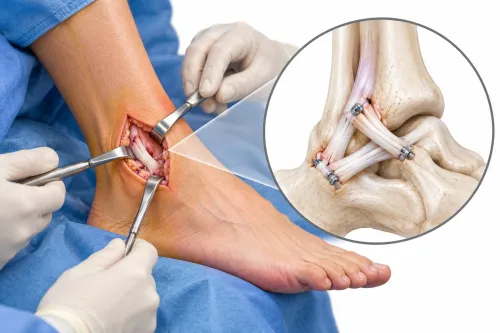
Prompt assessment is warranted for a complete ACL tear with instability, repeated ankle sprains from failed ligaments, recurrent shoulder dislocation caused by ligament or labral damage, Achilles or patellar tendon rupture, and a deep tendon laceration.
These injuries can progress to loss of function or require reconstruction if tissue cannot heal or stability does not return.
| Injury pattern | Why reconstruction may be considered |
|---|---|
| Complete ACL tear | Repeated giving-way, especially during pivoting |
| Failed ankle ligaments | Recurrent sprains and persistent ankle instability |
| Shoulder ligament or labral damage | Repeated dislocation or slipping |
| Achilles or patellar rupture | Loss of force needed for walking, pushing off, or straightening the knee |
| Deep tendon laceration | Severed tissue may no longer transmit movement |
Seek prompt evaluation after:
- A sudden pop followed by rapid swelling
- Inability to bear weight
- A visible gap in the tendon
- Loss of active movement, such as inability to straighten the knee or rise onto the toes
- A joint that repeatedly gives way
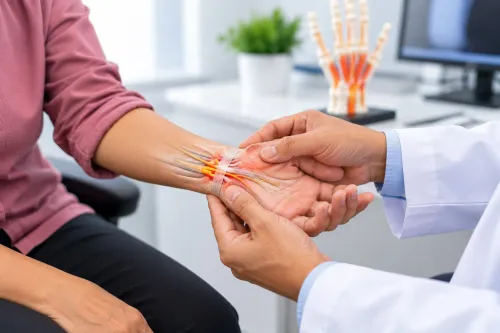
The clinician will ask how the injury happened, test instability and weakness, measure range of motion, and discuss your work, sport, and activity goals. X-ray checks fractures and alignment; ultrasound or MRI maps tendon, ligament, meniscal, cartilage, or labral damage.
An MRI finding alone does not decide surgery: symptoms, examination, instability, functional demands, tissue quality, and associated injuries must agree. Tendon and ligament reconstruction in Thane describes a category of procedures, not one standard operation.
When is reconstruction better than rest, bracing, physiotherapy, or direct repair?
Reconstruction becomes more persuasive when the original tissue cannot hold, the joint repeatedly gives way, or weakness persists despite structured treatment. It is not automatically better than rest, bracing, physiotherapy, or direct repair.
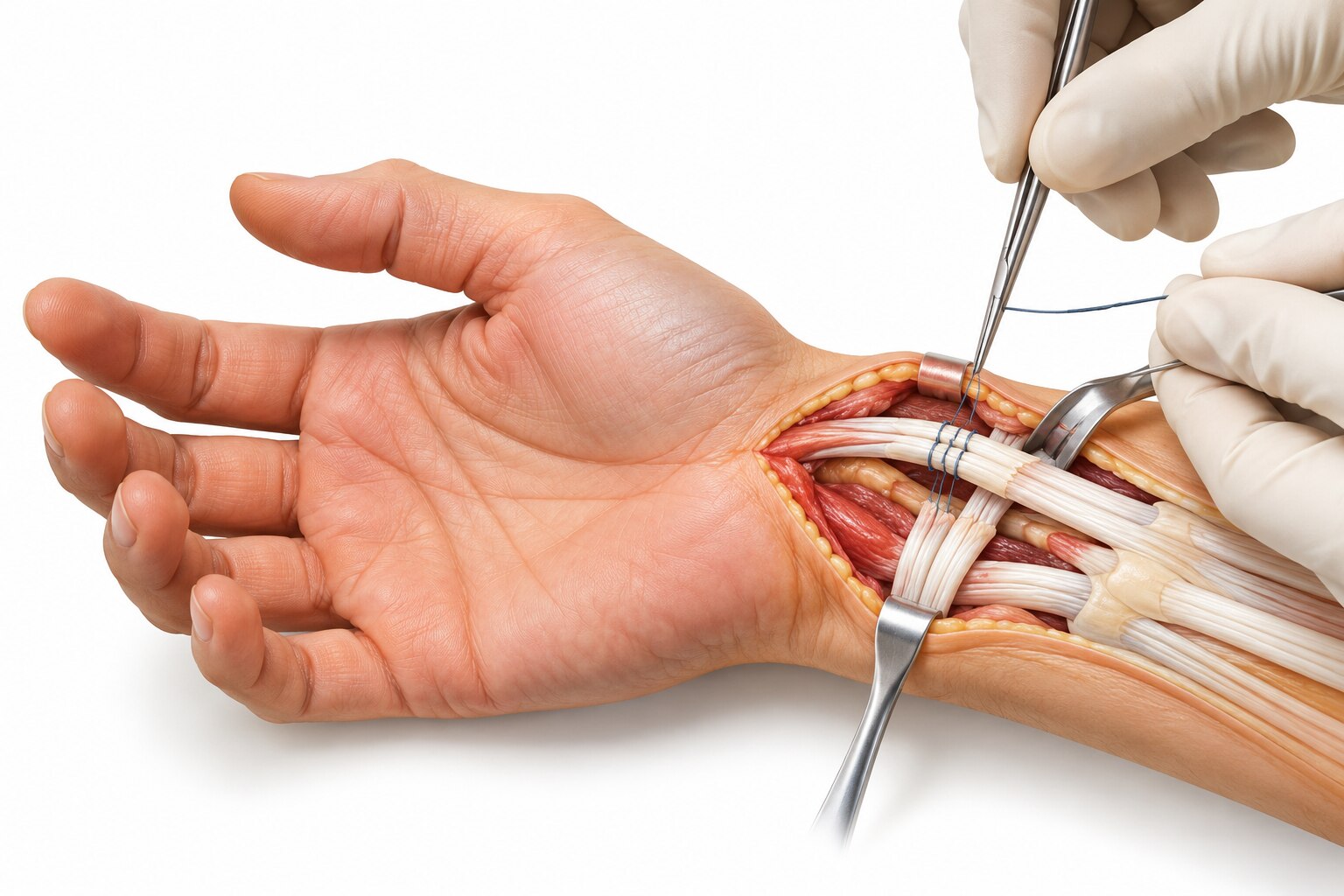
- Tendon repair brings fresh, viable tendon ends together. Tendon reconstruction bridges a chronic gap or replaces poor-quality tissue with a graft.
- Ligament repair reattaches or reinforces a repairable ligament. Ligament reconstruction replaces a failed ligament with a graft.
- Tendon transfer redirects a functioning tendon to restore movement when the original tendon cannot be repaired.
Nonoperative care can be reasonable for a partial ACL tear without giving-way, low-demand activity, willingness to modify sport, selected rotator-cuff tears, and some stable sprains. Activity modification, pain treatment, bracing, and supervised physiotherapy must match the injury and continue long enough to judge progress.
Surgery becomes more compelling with recurrent instability, combined ligament or meniscal injury, persistent weakness or pain after structured treatment, an acute traumatic full-thickness tendon tear, or a repairable injury in someone who needs high-demand function. A person considering tendon surgery in Thane should weigh:
- Benefit: restored tendon continuity or mechanical stability.
- Risks: infection, stiffness, blood clot, nerve or vessel injury, donor-site pain, re-tear, graft stretching, and pain that persists.
The decision depends on symptoms, examination, tissue quality, activity goals, and your ability to complete rehabilitation—not an MRI finding alone.
How do injury type and timing change the operation?
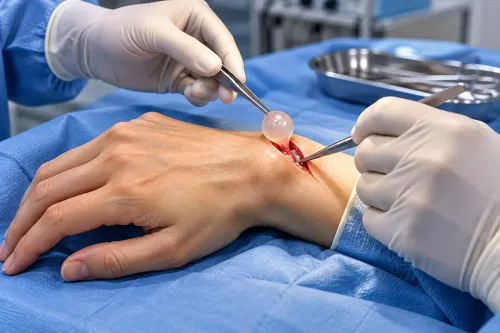
A fresh, clean tendon laceration with healthy ends may receive direct repair. Chronic retraction, a large gap, muscle atrophy, scarring, or poor tissue quality can make graft augmentation, tendon transfer, or staged reconstruction necessary.
| Case | What has changed | Likely effect on the operation |
|---|---|---|
| Acute injury | Viable tendon or repairable ligament ends remain close together | Direct tendon repair or selected ligament repair may be possible |
| Chronic or neglected injury | Retraction, gap, atrophy, adhesions, and scarring have developed | Grafting, tendon transfer, or staged reconstruction may replace simple repair |
| Failed treatment | A repair has stretched, ruptured, or left instability; associated damage may remain | Revision reconstruction requires assessment of the graft, tunnels, alignment, stiffness, and other injuries |
Achilles and patellar tendon ruptures, shoulder instability, repeated ankle sprains, and complete ACL tears each need a structure-specific plan. For an ACL, reconstruction usually places a tendon graft through bone tunnels rather than stitching the unusable original ligament.
Nonoperative care remains reasonable for selected stable or low-demand patients, but recurrent giving-way, combined injuries, or a return to pivoting sports strengthens the case for reconstruction.
Early ACL surgery is not automatically best. When surgery is indicated, the AAOS guideline supports reconstruction within about three months because delay can increase additional meniscal or cartilage injury; swelling, lost motion, and associated injuries must be addressed first.
MRI helps identify meniscus, cartilage, posterolateral-corner, and other ligament damage, but examination still determines whether ligament reconstruction in Thane is appropriate.
What graft and rehabilitation choices affect recovery?
An ACL graft choice balances failure risk, donor-site symptoms, sport demands, and available tissue. The AAOS guideline favors an autograft for young or active patients because it has a lower failure risk and avoids donor-tissue transmission concerns.
| Option | Practical advantages | Main trade-offs |
|---|---|---|
| Hamstring autograft | Uses your own tissue; less kneeling discomfort than a patellar-tendon graft | Hamstring weakness and graft-size limitations |
| Patellar-tendon autograft | Strong graft with reliable fixation | Front-knee pain and kneeling discomfort; possible quadriceps weakness |
| Quadriceps-tendon autograft | Large graft with useful tissue volume; avoids hamstring harvest | Anterior-thigh pain or weakness during recovery |
| Donor-tissue allograft | No tendon harvest and often less early donor-site pain | Higher failure concern in young, active patients and donor-tissue transmission risk |
Age, pivoting-sport demands, previous surgery, kneeling requirements, available tendons, and surgeon-patient preference shape the final decision. No graft is universally best.
For sports ligament surgery in Thane, expect return to sport to take roughly 6–12 months. Clearance depends on healed tissue, full motion, strength symmetry, movement quality, psychological readiness, and sport-specific testing—not the calendar alone.
Tendon rehabilitation starts with protection so loading does not rupture the repair, then progresses through controlled motion and strengthening. Excess loading causes failure; prolonged immobilisation causes adhesions, stiffness, and weakness. Restrictions vary with the tendon and repair construct.
What should you ask at a reconstruction consultation in Thane?
Take this checklist to a tendon reconstruction surgeon in Thane:
- Which exact tendon, ligament, nerve, or joint structure is injured, and is the tear partial or complete?
- How much retraction, scarring, muscle atrophy, or tissue loss is present? Can the tendon or ligament still receive a direct repair?
- Do my symptoms come from this injury, or could referred pain, nerve damage, a fracture-related problem, or another condition be responsible?
- What improvement should I expect without surgery? Has bracing, activity modification, or physiotherapy had enough time to work?
- What reconstruction, graft, tendon transfer, or staged procedure fits this tissue and my goals?
- How will you assess associated meniscal, cartilage, nerve, fracture, or alignment problems?
- How long will rehabilitation last, and when can I work, drive, lift, or return to sport?
- What return-to-sport tests will determine clearance rather than time alone?
- What are the risks, including infection, stiffness, clot, nerve or vessel injury, donor-site pain, graft stretching, re-tear, and persistent pain?
- If the repair fails, what is the next treatment?
| Option | What it means | When it applies |
|---|---|---|
| Direct repair | Joins viable ends | Fresh tear with little gap |
| Reconstruction | Bridges or replaces failed tissue | Retraction, scarring, or tissue loss |
| Transfer or staged surgery | Redirects another tendon or prepares tissue first | Direct repair is not feasible |
Ankur Hospital - Dr. Amol A. Gharote can provide a local setting to evaluate these questions and plan treatment; a tear does not automatically require surgery.
Related services
Tendon and Ligament Reconstruction Tendon and Ligament Reconstruction Tendon and ligament injuries can cause pain, instability, and reduced mobility, affecting daily activities and sports performance. Dr. View service → |
Soft Tissue Repair Treatment Soft tissue injuries involving muscles, tendons, ligaments, and cartilage can cause pain, swelling, weakness, and restricted movement. Dr. View service → |
Frequently asked questions
Which injuries need prompt assessment for possible reconstruction?
Arrange prompt assessment for a complete ACL tear with instability, repeated ankle sprains from ligament failure, recurrent shoulder dislocation from ligament or labral damage, Achilles or patellar tendon rupture, or a deep tendon laceration.
When is reconstruction better than rest, bracing, physiotherapy, or direct repair?
Reconstruction becomes a consideration when a torn structure cannot heal in a stable position, instability continues after suitable rehabilitation, or the tissue is too damaged or retracted for direct repair.
How do injury type and timing change the operation?
A fresh, clean tendon cut may be directly repaired, while chronic tears, tissue loss, scarring, or retraction can require graft reconstruction. Timing also affects joint stiffness, muscle weakness, and the available tissue.
What graft and rehabilitation choices affect recovery?
Graft source, fixation method, associated injuries, protection of the repair, physiotherapy progression, strength testing, and return-to-activity criteria all influence recovery.
What should you ask at a reconstruction consultation in Thane?
Ask which structure is damaged, whether repair or reconstruction is appropriate, which graft will be used, how long protection lasts, when physiotherapy starts, what complications are possible, and how return to work or sport will be assessed.
Related services
Sports Medicine Sports injuries can affect athletes and active individuals of all ages, causing pain, reduced performance, and limited mobility. Dr. View service → |
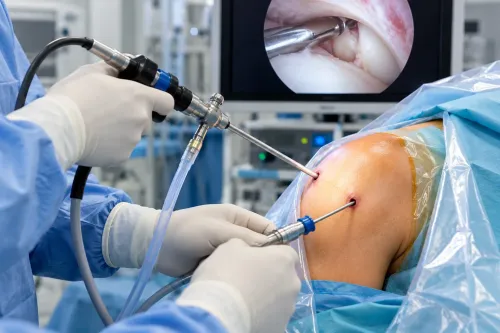
Arthroscopy Surgery Arthroscopy is a minimally invasive surgical procedure used to diagnose and treat a wide range of joint conditions with greater precision and faster... View service → |
Keywords