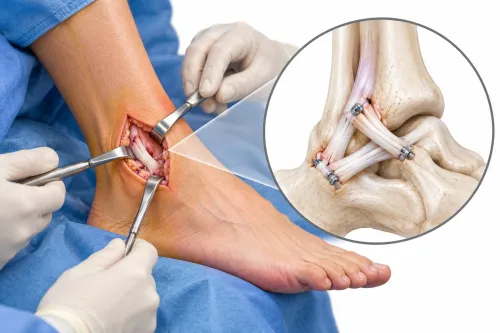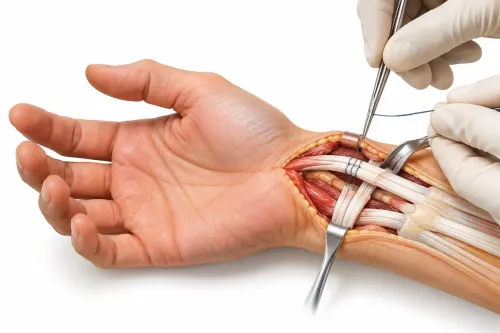
A wrist lump is not automatically a ganglion cyst, and removing the visible swelling without identifying its source can lead to the wrong treatment. You will be able to compare observation, aspiration and surgery, recognise urgent warning signs, and choose questions to ask before booking wrist lump care.
Key takeaways
- A changing wrist lump needs examination before you assume it is a ganglion.
- Ultrasound can distinguish a fluid-filled cyst from a solid wrist lump.
- Aspiration may relieve symptoms, but recurrence remains possible.
- Surgery suits persistent pain, restricted movement, nerve pressure or repeated recurrence.
Is the lump really a ganglion cyst?
A ganglion is usually a smooth, soft or fluctuant lump that changes size or firmness as you move the wrist. It commonly appears on the dorsal wrist, the volar or palm-side wrist, a finger joint, or beside a tendon sheath.
Pressure on a nerve can cause numbness, tingling or weakness, but those symptoms can also come from carpal tunnel syndrome, ulnar neuropathy or neck disease.
| Lump | Clues that point away from a typical ganglion |
|---|---|
| Ganglion | Soft, fluctuant, mobile; size or discomfort changes with wrist movement |
| Lipoma | Soft, rubbery and freely mobile; usually does not vary with movement |
| Giant cell tumour of the tendon sheath | Firm, solid and often fixed near a finger or tendon |
| Carpal boss | Hard, immovable bony prominence on the back of the hand or wrist |
| Epidermoid cyst | Firm, rounded lump near the skin; a pore or skin attachment may be visible |
| Inflamed tendon sheath | Tender thickening that hurts when the tendon moves |
| Arthritis-related swelling | Joint-line fullness with stiffness, reduced movement or grinding |
| Vascular lump | Pulsates, enlarges with dependency or has a bruit; never aspirate it |
Do not hit, burst or self-aspirate any wrist lump. Seek prompt assessment for rapid growth, a hard fixed mass, redness or warmth, fever, severe night pain, numbness, weakness, reduced circulation, or swelling after significant trauma. A rare malignant soft-tissue mass needs imaging and a diagnostic pathway, not routine cyst removal.
Before searching for wrist lump removal in Thane, confirm what the lump is.
Which tests and non-surgical options fit the lump?
A clinician starts by examining the lump and comparing both hands, wrists and fingers. They assess size, softness, movement, tenderness, pulsation, changes with wrist motion, grip, sensation, strength and nerve compression. X-rays do not show a fluid-filled cyst directly, but they can reveal arthritis, a fracture or a carpal boss.
Ultrasound can distinguish fluid-filled tissue from a solid lump, show blood flow and identify a connection to a joint or tendon sheath. MRI is reserved for a deep, atypical, recurrent or uncertain lump. These findings, plus pain, restricted movement, work demands and nerve symptoms, determine whether treatment is needed.
Observation is reasonable for a small, painless, stable swelling that neither limits movement nor compresses a nerve. Options differ in their trade-offs:
| Option | What it involves | When it fits |
|---|---|---|
| Activity modification | Reduce gripping, wrist loading or repeated impact | Symptoms flare with work or sport |
| Pain relief | Clinician-advised analgesia and wrist support | Pain is mild and the diagnosis is clear |
| Needle aspiration | Drain cyst fluid through a needle | A symptomatic, accessible cyst when avoiding surgery matters |
| Corticosteroid | Injection after aspiration when clinically appropriate | Persistent inflammation or symptoms, not every cyst |
Aspiration is less definitive because the cyst wall or communicating stalk can remain, allowing fluid to return. Recurrence is especially common with palm-side ganglia. Never aspirate a pulsatile, vascular or solid lump: bleeding, tissue injury or delayed diagnosis can result. The best ganglion cyst treatment in thane depends on confirmed diagnosis, location and symptoms.
When is surgery the better fit, and what happens during removal?
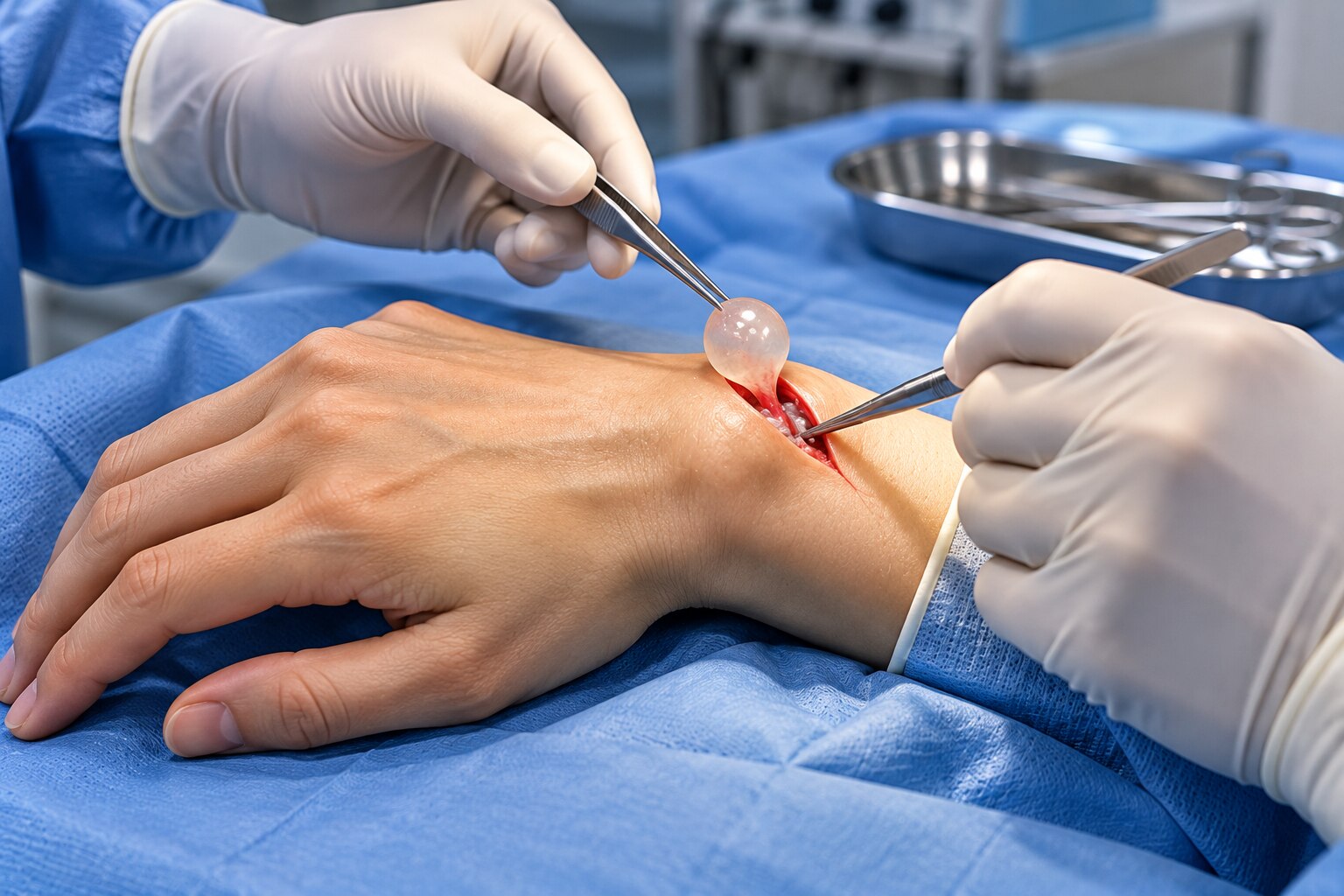
Excision is a better fit when pain persists, wrist motion is restricted, pressure causes numbness or tingling, work or sport becomes difficult, or the cyst returns after aspiration. Appearance alone is not a reason for surgery.
A consultation reviews the lump, hand function, previous treatment and medical history; ultrasound or MRI helps when the attachment, depth or diagnosis remains uncertain.
Location changes the operation:
| Location | What the surgeon plans around | Main concern |
|---|---|---|
| Dorsal wrist | The cyst and its stalk, often linked to the scapholunate ligament or radiocarpal joint | Removing only the visible sac can leave its origin behind and raise recurrence risk |
| Volar wrist | The cyst’s relationship to the radial artery and nearby nerves | Dissection requires greater caution and anatomy-based planning; it is not a simple cosmetic procedure |
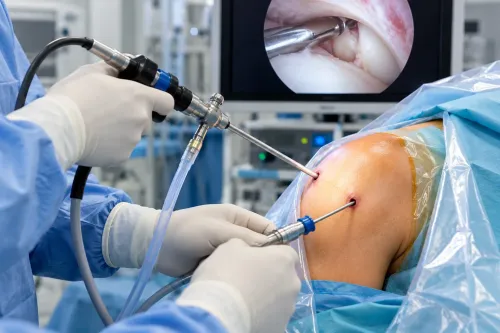
The operation uses an open incision or, for selected dorsal cysts, an arthroscopic approach. The surgeon removes the cyst and identified stalk or attachment. Local, regional or another anaesthetic plan depends on the procedure and your health. Many cases are day-care procedures, while admission depends on the operation, anaesthesia needs and medical requirements.
If the lump is atypical or the diagnosis is uncertain, the removed tissue is sent for specimen assessment. If you are comparing ganglion cyst removal in thane east, ask which approach fits the location and why. Surgery lowers recurrence risk but cannot guarantee permanent relief.
What are the recovery demands and risks of each option?
| Observation | No wound care or downtime; monitor size, pain, movement and nerve symptoms | Avoids procedure risks, but the lump can persist, recur or limit activity |
|---|---|---|
| Aspiration | Small dressing; keep the puncture site clean and dry as instructed; soreness usually settles before normal light use | Faster recovery than surgery, but the cyst wall or stalk remains, so recurrence is common |
| Excision | Dressing and wound care until the incision heals; elevation, finger movement and any prescribed splint are part of recovery | Removes the cyst and identified attachment, reducing recurrence risk, but adds surgical risks and downtime |
After aspiration or excision, keep the hand elevated to reduce swelling and move the fingers early unless specifically told not to. Use a splint only for the period prescribed; prolonged immobilisation can contribute to stiffness.
Desk work can resume when pain allows and the dressing does not interfere. Drive only when you can grip the wheel, change gear and perform an emergency stop safely, without sedating pain medicine. Avoid lifting until the clinician confirms that the wound and deeper tissues can tolerate it, then increase load gradually.
Swelling, scar sensitivity, reduced wrist motion and temporary weakness can follow excision. Strength and movement return according to wound healing, pain and the procedure, not a fixed timetable. Resume sport in stages: walking and gentle movement first, then light practice, and contact, racket or weight-bearing activity after clearance.
Surgery can cause infection, bleeding, stiffness, scar tenderness, nerve irritation or injury, and radial artery injury with a volar cyst. Persistent pain from arthritis, ligament disease or another condition can remain. Excision cannot guarantee permanent relief or prevent every new lump.
How should you compare wrist lump care in Thane East?
Compare the clinician, diagnostic pathway and aftercare—not just the quoted removal procedure. A consultation should establish whether the lump is clinically a ganglion and whether ultrasound, X-ray or MRI is needed. Ask which alternatives were considered, why the recommendation suits the lump’s location and symptoms, and what happens if the diagnosis changes.
| Option | Main trade-off | Ask about |
|---|---|---|
| Observation | No procedure, but symptoms or size may persist | Review timing and warning signs |
| Aspiration | Small wound and quick recovery, but the cyst wall or stalk remains and recurrence is common | Whether the lump is safe to needle |
| Excision | Addresses the cyst and attachment, but involves wound care, scar and temporary restrictions | Recurrence risk, anaesthesia and recovery |
Before booking, ask about hand and wrist experience, examination quality, imaging access, the procedure setting, emergency support and follow-up arrangements. For a search such as ganglion cyst surgeon east in thane, verify these details rather than assuming every wrist lump needs removal.
Bring a record of duration and size changes, photographs of intermittent swelling, pain triggers, numbness, weakness, trauma, previous aspiration or surgery, occupation, sport demands, medicines including blood thinners, and conditions affecting bleeding or healing. Also ask about dressing care, splint use, lifting and driving restrictions, the follow-up schedule and the plan if symptoms persist.
Ankur Hospital - Dr. Amol A. Gharote can be assessed against these same examination, imaging, procedure-setting and aftercare questions.
Related service
Ganglion Cyst Removal Dr. Amol Gharote is an experienced Orthopedic Surgeon at Ankur Hospital, Thane East, offering expert evaluation and treatment for ganglion cysts... View service → |
Frequently asked questions
How can you tell whether a wrist lump is a ganglion cyst?
A ganglion is often smooth, fluctuant and located near a joint or tendon. A clinician examines its position, movement and firmness, then may recommend ultrasound to distinguish it from a solid lump or another condition.
Which non-surgical treatments are available for a ganglion cyst?
Observation is suitable when the lump causes no significant symptoms. A clinician may also discuss wrist support, activity changes, pain relief or needle aspiration, depending on the cyst’s location and symptoms.
When is ganglion cyst surgery a better fit?
Removal may suit a painful cyst, restricted wrist movement, nerve pressure, repeated recurrence after aspiration or a lump that continues interfering with daily activities.
What should you compare when choosing wrist lump removal in Thane?
Compare the examination process, imaging access, treatment options, surgeon’s experience with the cyst’s location, recovery instructions, follow-up plan and risks explained before treatment.
Keywords