Foot or ankle pain does not automatically mean you need an operation. By the end, you will know which symptoms need urgent assessment, how children’s cases differ from adults’, what tests and treatments doctors use, and how to compare specialists before agreeing to surgery.
Key takeaways
- Seek surgical advice for persistent pain, instability, rupture, displaced fractures, or failed non-surgical treatment.
- Children need age-specific assessment of growth plates, alignment, gait, and foot development.
- Ask how diagnosis, imaging, the proposed operation, weight-bearing, and rehabilitation fit your case.
- Compare Thane specialists by relevant training, experience, explanations, and follow-up arrangements.
When adult foot or ankle problems need surgery
Surgery becomes reasonable when foot or ankle disease causes persistent pain, loss of function, recurrent ankle giving-way, tendon rupture, displaced fracture, progressive adult-acquired flatfoot, arthritis, or symptoms that continue despite appropriate non-surgical treatment.
Uncomplicated ankle sprains, plantar fasciitis, flexible flat feet and some tendon disorders usually begin with activity modification, footwear or orthoses, physiotherapy, medication, bracing or immobilisation.
Common reasons for planned surgery include:
- A displaced fracture or an ankle fracture with an unstable mortise, syndesmosis injury or joint-surface involvement
- A ruptured tendon that prevents normal walking or cannot heal in a useful position
- A bunion causing persistent pain or difficulty wearing shoes after non-surgical care; a prominent joint alone is not an indication
- Fixed adult-acquired flatfoot, painful arthritis or deformity that limits walking
- Recurrent instability despite rehabilitation and bracing
- An infected wound requiring drainage, removal of dead tissue or restoration of damaged structures
A diabetic foot ulcer with spreading redness, warmth, swelling, drainage, black tissue, fever or unexplained pain needs prompt assessment, not elective scheduling. Reduced sensation or poor circulation can hide serious infection.
For an ankle fracture, the X-ray label alone does not decide treatment: a foot surgeon in Thane must assess alignment, mortise stability, syndesmosis and joint surface. Likewise, foot and ankle surgery in Thane should match examination findings, diagnosis and functional loss—not an abnormal scan or cosmetic concern alone.
How children’s foot and ankle conditions are assessed
A painless, flexible flat foot is often a normal developmental finding and usually needs neither arch supports nor surgery. Arrange assessment for pain, a rigid arch, asymmetry, restricted ankle movement or worsening alignment.
Children may present with clubfoot, congenital deformity, intoeing, toe-walking, flexible or rigid flatfoot, sports injuries, growth-plate injuries or a painful accessory navicular. A pediatric foot specialist in Thane assesses growth and function before recommending treatment.
The evaluation includes:
- Watching gait and standing alignment
- Checking limb length, foot position, ankle and joint movement
- Assessing developmental stage and activity demands
- Identifying whether growth plates remain open
- Considering how an operation could affect future growth
Ponseti treatment for clubfoot uses repeated manipulation and casting, followed by Achilles tenotomy when the tendon remains tight. Prolonged bracing then holds the correction. Skipping or shortening the brace schedule increases recurrence risk, so long-term follow-up matters.
An ankle injury involving the physis needs a separate classification from an ordinary adult fracture. Follow-up checks for growth arrest or angular deformity because damage to an open growth plate can change future alignment.
For a painful accessory navicular, begin with reduced aggravating activity, footwear changes, orthoses or casting. Persistent symptoms can lead to excision of the extra bone with tendon reattachment or advancement. The decision should follow functional problems and examination findings, not an X-ray appearance alone.
What happens during diagnosis and treatment planning
The consultation starts with a named problem, not a scan. Your clinician records pain duration and location, injury mechanism, activity limits, previous treatment, nicotine use and diabetes. Walking and standing examination checks alignment, swelling, deformity, skin and wounds; range-of-motion, stability and gait tests assess joints, ligaments and function.
Circulation and sensation checks identify vascular or nerve concerns.
Weight-bearing X-rays answer questions about alignment, deformity, arthritis, fracture position and the ankle mortise. Ultrasound helps assess selected tendons during movement. MRI is useful for occult bone injury, cartilage, ligament or tendon problems; CT defines complex fractures and joint surfaces. Imaging supports a clinical diagnosis—an abnormal scan alone does not prove that surgery will help.
Treatment usually climbs a decision ladder: observation, footwear changes, orthoses, physiotherapy, medication, injections, braces or casting; displaced injuries may need closed reduction, followed by surgery when function, stability or healing demands it.
Flexible early flatfoot may respond to non-operative care, while fixed flatfoot, arthritis or failed treatment can require different combinations of tendon procedures, osteotomy or fusion.
Before choosing foot and ankle surgery in Thane, ask:
- What named diagnosis is being treated?
- What has already been tried?
- What happens if I wait?
- Is a second opinion reasonable?
An ankle surgeon in Thane should explain why each test and treatment fits your findings, including how diabetes or nicotine affects wound and bone healing.
Which operations and recovery issues should you understand
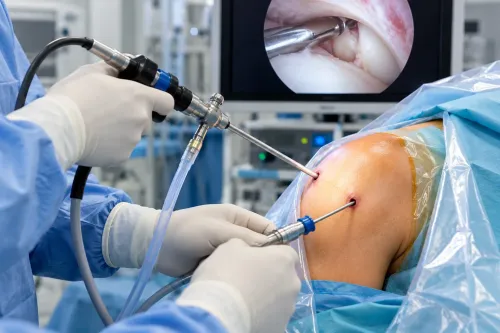
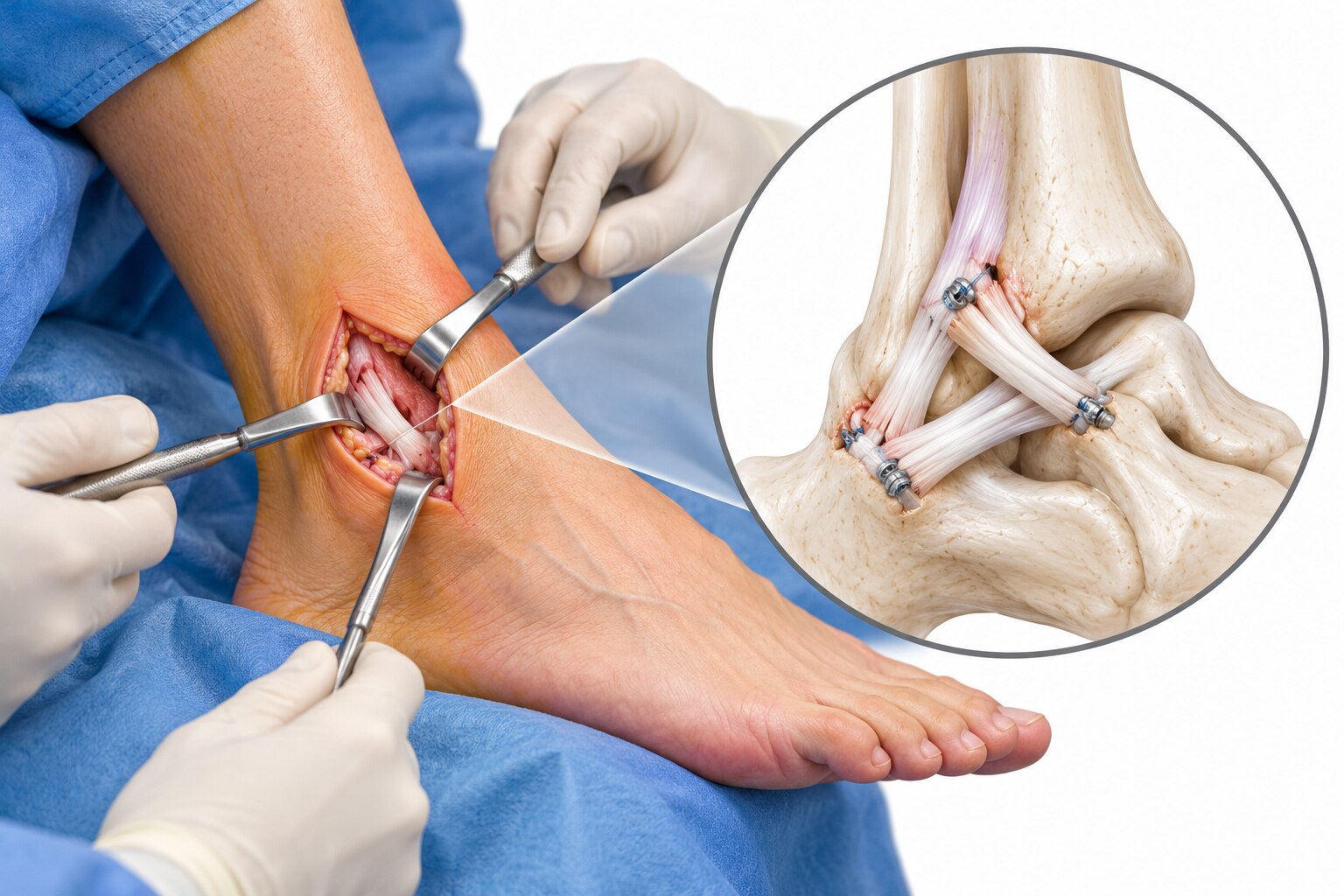
Fracture reduction and internal fixation realigns displaced bone and holds it with plates, screws or other implants. Ankle arthroscopy addresses selected cartilage, loose-body or joint problems through small portals; ligament repair or reconstruction treats recurrent instability, while tendon repair restores a torn tendon.
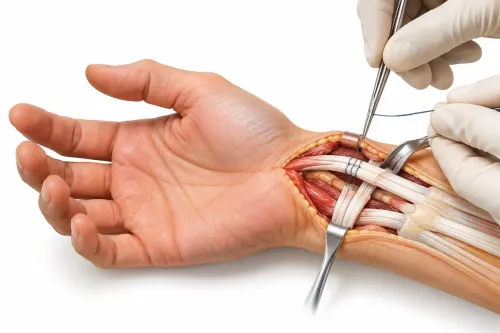
Achilles tendon surgery is one option for an acute rupture, not an automatic requirement. Bunion correction may combine bone cuts, soft-tissue balancing or fusion, depending on the deformity and joint damage. Flatfoot reconstruction is not one operation: flexible deformity may need tendon work and osteotomy, while fixed deformity or arthritis can require fusion.
| Option | Advantages and limits | Factors affecting choice |
|---|---|---|
| Structured non-operative treatment | Avoids surgical wound, infection and nerve risks; requires protected rehabilitation and carries rerupture risk | Activity level, tendon-gap findings, medical risk and rehabilitation commitment |
| Surgery | Directly repairs the rupture and may reduce rerupture in selected comparisons; adds wound, infection and nerve risks | Rupture pattern, health, goals and the agreed rehabilitation protocol |
Recognised complications include stiffness, recurrent deformity, nerve symptoms, nonunion, infection, blood clots and wound-healing problems. Ask an ankle surgeon in Thane for procedure-specific details about protected or non-weight-bearing time, driving and work limits, physiotherapy milestones, thrombosis precautions and what counts as a satisfactory result.
Smoking, vaping and nicotine replacement exposure can impair wound and bone healing, especially after osteotomy or fusion. Discuss cessation before elective foot and ankle surgery in Thane, and ask how nicotine use changes your plan.
How to compare foot and ankle specialists in Thane
Choose the clinician by diagnosis, not by a generic claim of experience. Ask a foot surgeon in Thane or ankle surgeon in Thane whether they regularly treat your exact problem, whether their caseload is adult, paediatric or both, and what result they expect.
| Patient group | Questions to ask | Warning sign |
|---|---|---|
| Adult | What diagnosis is being treated, and what happens if I wait? | Surgery based only on an abnormal scan or appearance |
| Child | How will open growth plates, deformity and future growth affect treatment? | No plan for growth-arrest or angular-deformity monitoring |
| Clubfoot or physeal injury | How will recurrence or growth-plate damage be checked? | Follow-up ends when casting or the fracture heals |
Before booking, confirm:
- Weight-bearing radiographs and MRI, CT or ultrasound when clinically indicated
- Anaesthesia planning, physiotherapy, rehabilitation milestones and thrombosis precautions
- Non-operative alternatives, expected benefit, material complications, failure and revision possibilities
- Protected or non-weight-bearing time, wound care, unexpected-pain contact and changes in weight-bearing
- Who provides follow-up, and whether a second opinion is appropriate
A pediatric foot specialist in Thane should explain why a painless flexible flat foot does not need surgery, while pain, rigidity, asymmetry or worsening alignment needs assessment. For a local option such as Ankur Hospital - Dr. Amol A. Gharote, apply this diagnosis-specific checklist rather than relying on reputation alone.
Bring X-rays, medication details, diabetes information, previous records and your functional goals.
Related services
Foot and Ankle Surgery Dr. Amol Gharote is an experienced Orthopedic Surgeon at Ankur Hospital, Thane East, offering specialized diagnosis and treatment for a wide range of... View service → |
Paediatric orthopaedics treatment and management Paediatric orthopaedics treatment and management Dr. Amol Gharote is a skilled Orthopedic Surgeon at Ankur Hospital, Thane East, providing comprehensive paediatric orthopaedic treatment and... View service → |
Frequently asked questions
When do adult foot or ankle problems need surgery?
Surgery becomes reasonable for persistent pain, loss of function, recurrent ankle giving-way, tendon rupture, displaced fracture, progressive adult-acquired flatfoot, arthritis, or symptoms that continue despite appropriate non-surgical treatment.
How are children’s foot and ankle conditions assessed?
Assessment considers the child’s age, symptoms, gait, foot alignment, range of motion, strength, growth plates, and developmental stage. The specialist may also use weight-bearing X-rays or other imaging.
What happens during diagnosis and treatment planning?
The specialist reviews your symptoms and medical history, examines the foot and ankle, orders suitable imaging, explains treatment options, and discusses expected benefits, risks, weight-bearing limits, and rehabilitation.
Which recovery issues should you understand before foot or ankle surgery?
Ask when you can bear weight, how long immobilisation may last, when driving and work can resume, which exercises are required, how pain and swelling are managed, and what follow-up schedule applies.
How can you compare foot and ankle specialists in Thane?
Compare relevant orthopaedic training, experience with your condition and age group, clarity about diagnosis and alternatives, surgical planning, hospital facilities, and postoperative follow-up.
Keywords