A child’s bones are still changing in length, shape and strength, so a limp, uneven gait or injury needs more than an adult-style assessment. You will learn how to recognise urgent warning signs, understand the tests used, and judge when observation, bracing, therapy or surgery is appropriate.
Key takeaways
- Growth-plate injuries need assessment for future angulation and limb-length differences.
- Seek review for persistent pain, swelling, limping, stiffness or uneven walking.
- Ask how skeletal maturity, alignment and growth-plate involvement will be checked.
- Compare hospitals by pediatric imaging, rehabilitation, follow-up and surgical expertise.
Why a child’s bones need a different orthopedic assessment
Open growth plates make a child’s injury a growth problem as well as an immediate fracture or joint problem. A pediatric orthopedic doctor assesses skeletal maturity, fracture location, alignment, joint surface and growth-plate involvement. Damage can cause premature growth-plate closure, later angulation or limb-length difference, while a well-aligned injury may remodel as the child grows.
Adult thresholds and routine adult X-rays cannot be applied automatically.
Developing joints also change diagnosis. Cartilage may not show clearly on plain radiographs, and symptoms can reflect hip development, gait mechanics, repetitive stress or congenital alignment rather than a broken bone. The useful test depends on age: hip ultrasound suits young infants before ossification, while pelvic radiography becomes more informative later.
Treatment weighs remaining growth and function, so casting, bracing, activity reduction or therapy may protect development.
The aim of pediatric orthopedic treatment in Thane should be clear after assessment:
- The diagnosis, including whether the growth plate, cartilage or joint surface is involved.
- The risk of growth disturbance, future deformity or unequal limb length.
- Why observation, physiotherapy, casting, bracing or surgery is being recommended.
- The follow-up interval, imaging plan and warning signs requiring earlier review.
A child with persistent pain, a limp, restricted movement or a visible change in alignment needs assessment rather than repeated pain-masking.
Which childhood bone, joint and walking problems need review?
A brief phase of intoeing, bow legs or knock knees can follow normal growth, but asymmetry, worsening alignment or difficulty running deserves review. Arrange assessment for persistent limping, unequal leg length, a shoulder or hip sitting higher, visible deformity, restricted movement, or loss of a skill the child had already gained.
| Finding | Why arrange review | Timing |
|---|---|---|
| Painful, rigid or one-sided flat foot | This is unlike painless, flexible flat feet and can indicate a structural problem | Routine appointment |
| Sports pain that persists, returns with activity, causes a limp, or occurs at rest or night | Repeated loading can injure a growth plate or developing cartilage | Stop the provoking activity and arrange prompt review |
| Hip stiffness, limited hip opening, or a new limp | Hip disease can present as knee pain, and early treatment matters | Prompt review |
| A curved spine, uneven shoulders or hips | These signs can indicate scoliosis or another alignment problem | Routine appointment |
| Fracture, repeated falls, limb-length difference, clubfoot or cerebral-palsy-related stiffness | These conditions can affect growth, balance and joint movement | Specialist assessment |
Seek urgent medical care for a limp with fever, severe hip pain or refusal to bear weight; infection in the joint or bone must be excluded.
After an injury, go urgently for an open wound, cold or blue fingers or toes, numbness, severe swelling, an obviously displaced limb, or inability to move the fingers or toes.
What happens during the examination and imaging process?
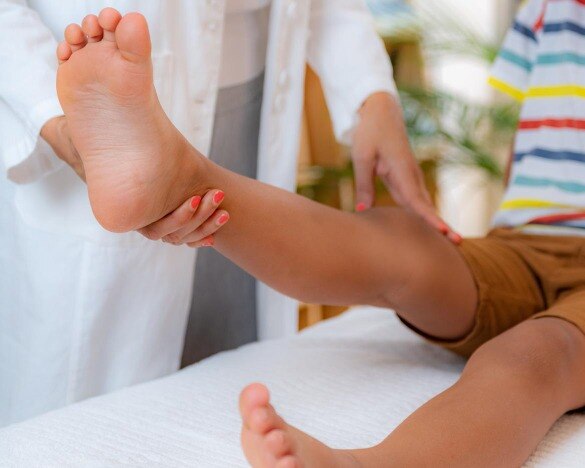
A pediatric orthopedic doctor in Thane identifies the cause by combining the child’s history, walking pattern, joint examination and targeted tests. Ask about when the limp or pain began, any injury, fever, night pain, activity-related symptoms, birth history and changes in movement or development.
1. The doctor watches the child walk, run or stand, checking for a shortened leg, intoeing, outward foot rotation, hip drop or uneven weight-bearing.
2. The examination compares both sides for swelling, warmth, tenderness, muscle weakness, joint range, limb alignment, spine position and signs involving the nerves or blood supply.
3. The doctor considers skeletal maturity and checks whether pain lies over a growth plate. Persistent focal tenderness can require immobilisation, repeat imaging or specialist follow-up even after a normal first X-ray.
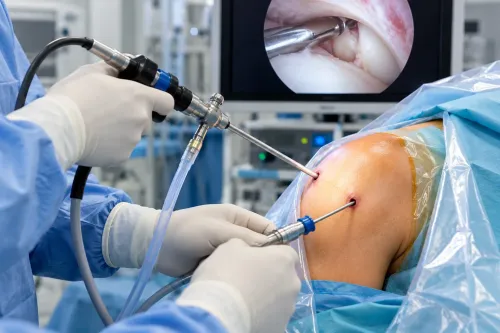
4. The doctor orders tests based on the findings. X-rays show bone alignment and many fractures; ultrasound can detect fluid around the hip; MRI can reveal an occult fracture, infection, tumour, cartilage problem or stress injury. Blood tests help investigate infection or inflammation.
A limp with fever, severe hip pain or refusal to bear weight needs urgent medical assessment because septic arthritis or osteomyelitis can damage a growing joint. Hip disease can also appear as knee pain, so examining only the knee can miss the source.
When are observation, therapy, braces or surgery used?
The choice depends on the diagnosis, pain, function, skeletal maturity, remaining growth, deformity and risk of progression—not appearance alone.
| Option | What it means | When it applies |
|---|---|---|
| Observation | Scheduled reviews and imaging | Mild, stable problems; smaller scoliosis curves; normal early bow legs or knock knees without warning signs |
| Physiotherapy | Exercises, stretching, strengthening or gait work | Weakness, stiffness, cerebral-palsy-related tightness, recovery after injury or surgery |
| Activity changes | Temporarily reducing impact, contact or painful movements | Sports injuries, overuse pain or healing fractures |
| Cast or splint | Immobilises a bone or joint | Fractures, suspected growth-plate injuries or unstable joints |
| Orthosis or brace | Supports alignment or controls movement | Selected scoliosis cases in growing children, or specific functional problems; not ordinary physiologic bowing |
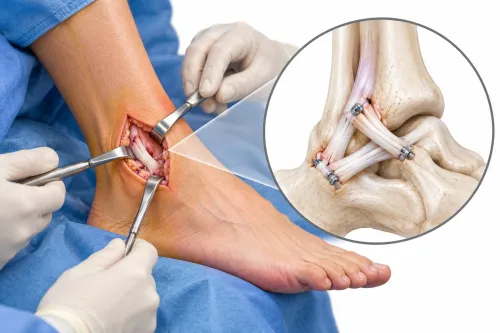
| Surgery | Realigns, stabilises or corrects growth | Major displacement, persistent functional deformity, progressive scoliosis, or problems unlikely to remodel |
A cast or specialist review can be appropriate when focal growth-plate tenderness persists despite a normal first X-ray. Rotation, major displacement and deformity away from a joint remodel less reliably, so “wait and see” is not automatically safe.
A child bone specialist in Thane may use guided growth for selected angular or limb-length problems. The procedure temporarily slows one side of a growth plate, then relies on remaining growth; it requires scheduled X-rays and cannot help after growth is complete.
Corrective surgery is chosen when growth is insufficient, the deformity is severe, or monitoring shows progression. Bracing decisions for scoliosis depend on curve size, maturity and progression risk.
How should you compare a pediatric orthopedic hospital in Thane?
A suitable facility should manage the whole pathway, from child-sized assessment and imaging to casting, bracing, surgery and review. Do not choose a hospital solely because its signboard says “orthopaedics”; ask who treats children and how the team accounts for skeletal maturity, growth-plate involvement and remaining growth.
| Capability | What to verify | Why it matters |
|---|---|---|
| Age-appropriate assessment | A pediatric orthopedic doctor in Thane examines children and reviews alignment, gait and growth plates | A child’s injury is not managed as a smaller adult injury |
| Imaging and anesthesia | Pediatric imaging protocols, child-sized equipment and pediatric anesthesia support when sedation is needed | Fear, movement or complex procedures can make adult arrangements unsafe or inadequate |
| Non-surgical care | On-site casting, splinting, orthoses and physiotherapy coordination | Poor immobilisation can affect healing, comfort and later alignment |
| Surgical escalation | Access to pediatric orthopedic surgery, trauma care and deformity correction | A growth-plate injury or worsening deformity may need timely escalation |
| Follow-up | Written review dates, repeat X-ray plans and contact instructions for worsening pain, swelling, fever or numbness | Growth arrest, loss of alignment and missed complications can appear after the first visit |
Ask who will review a cast or brace, how quickly an urgent appointment is available, and whether the same team tracks fracture healing. For suspected growth-plate injury, confirm what happens if tenderness persists despite a normal first X-ray.
If you are comparing Ankur Hospital - Dr. Amol A. Gharote with another pediatric orthopedic hospital in Thane, put these answers side by side before choosing.
Related service
Paediatric orthopaedics treatment and management Paediatric orthopaedics treatment and management Dr. Amol Gharote is a skilled Orthopedic Surgeon at Ankur Hospital, Thane East, providing comprehensive paediatric orthopaedic treatment and... View service → |
Frequently asked questions
Why do children need a different orthopedic assessment?
Open growth plates can change how an injury heals. Assessment must check skeletal maturity, fracture location, alignment, joint surface and growth-plate involvement.
Which childhood bone, joint and walking problems need review?
Arrange a review for persistent pain, swelling, stiffness, limping, restricted movement, repeated falls, uneven leg length or a visible change in alignment.
What happens during a pediatric orthopedic examination and imaging?
The doctor reviews the injury or walking pattern, examines movement and alignment, and orders X-rays when needed to assess the bone, joint and growth plate.
When are observation, therapy, braces or surgery used?
Observation suits stable problems that need monitoring. Physiotherapy addresses strength and movement, braces support selected alignment or healing problems, and surgery is considered for unstable, displaced or growth-threatening conditions.
How should you compare a pediatric orthopedic hospital in Thane?
Check the doctor’s pediatric experience, access to child-appropriate imaging, treatment options, rehabilitation support, emergency arrangements and a clear follow-up plan for growth-related changes.
Keywords