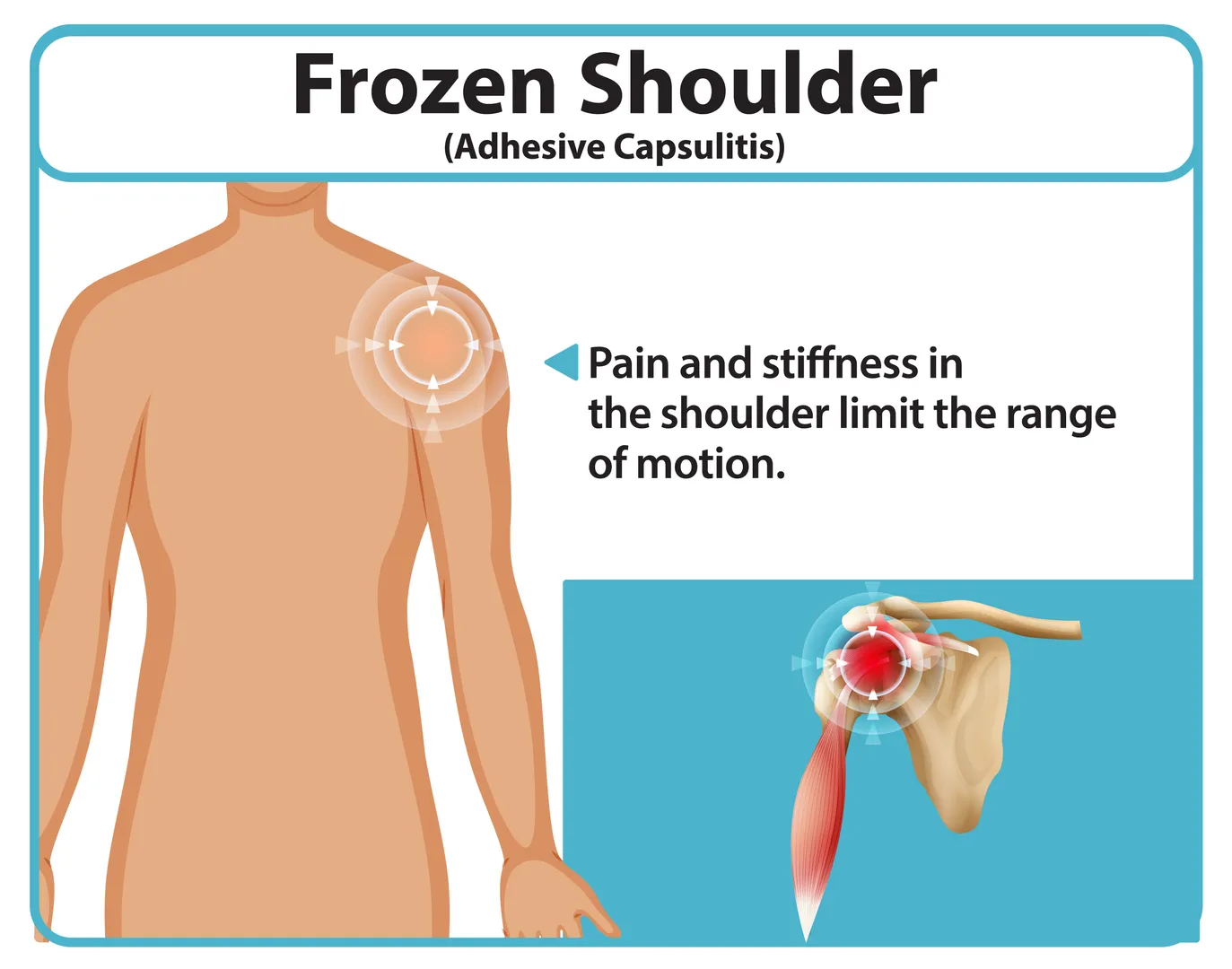
A shoulder that gradually becomes painful and increasingly difficult to move may be affected by frozen shoulder, medically known as adhesive capsulitis. The condition can interfere with seemingly simple tasks such as reaching overhead, putting on clothes, combing hair, fastening garments, or reaching behind the back.
Frozen shoulder is different from ordinary muscle soreness because both pain and progressive stiffness are prominent features.
How Does Frozen Shoulder Develop?
The shoulder joint is surrounded by a capsule of connective tissue. In frozen shoulder, this capsule becomes inflamed, thickened, and tight, restricting normal movement.
The condition commonly progresses through phases.
During the painful or 'freezing' stage, discomfort increases and movement gradually becomes restricted. The stiff or 'frozen' stage may involve less intense pain in some patients but substantial loss of movement. During the recovery or 'thawing' stage, mobility can gradually improve.
The duration and severity of each stage vary considerably between individuals.
Who Is More Likely to Develop It?
Frozen shoulder can sometimes occur without a clear triggering event. It may also appear after an injury or surgery when the shoulder has remained relatively immobile.
Certain medical conditions, particularly diabetes, are associated with an increased likelihood of developing frozen shoulder.
How Is It Different From a Rotator Cuff Problem?
Both conditions can cause shoulder pain, but their movement patterns can differ.
Frozen shoulder typically restricts both active movement, where the patient moves the arm, and passive movement, where an examiner attempts to move it.
Rotator cuff disorders may cause weakness or pain during active movement while some passive movement remains relatively preserved.
A clinical examination is therefore useful for distinguishing between common causes of shoulder symptoms. Imaging may be advised when another condition needs to be excluded.
What Treatment May Be Recommended?
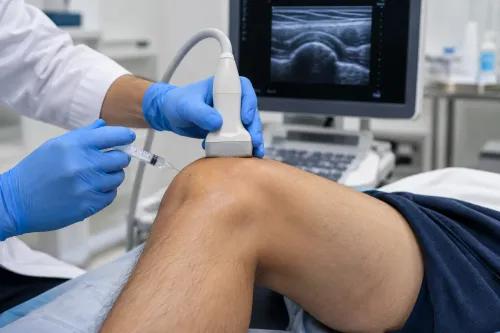
Management depends on the stage and severity. Options may include pain management, carefully selected physiotherapy and mobility exercises, and in suitable cases injection-based treatment.
Aggressive exercise is not automatically better. The rehabilitation approach needs to match the condition and its current stage.
People in Thane and neighbouring parts of Maharashtra often delay evaluation because they expect shoulder stiffness to disappear like a minor strain. When movement continues to decline, an assessment can help determine whether frozen shoulder or another shoulder disorder is responsible.
At Ankur Hospital in Thane, Dr. Amol A. Gharote assesses shoulder pain and movement restriction before recommending an appropriate management plan.
Recognising frozen shoulder early can help patients understand why the shoulder is becoming stiff and follow a treatment strategy based on controlled restoration of mobility rather than repeatedly provoking an already painful joint.
Keywords