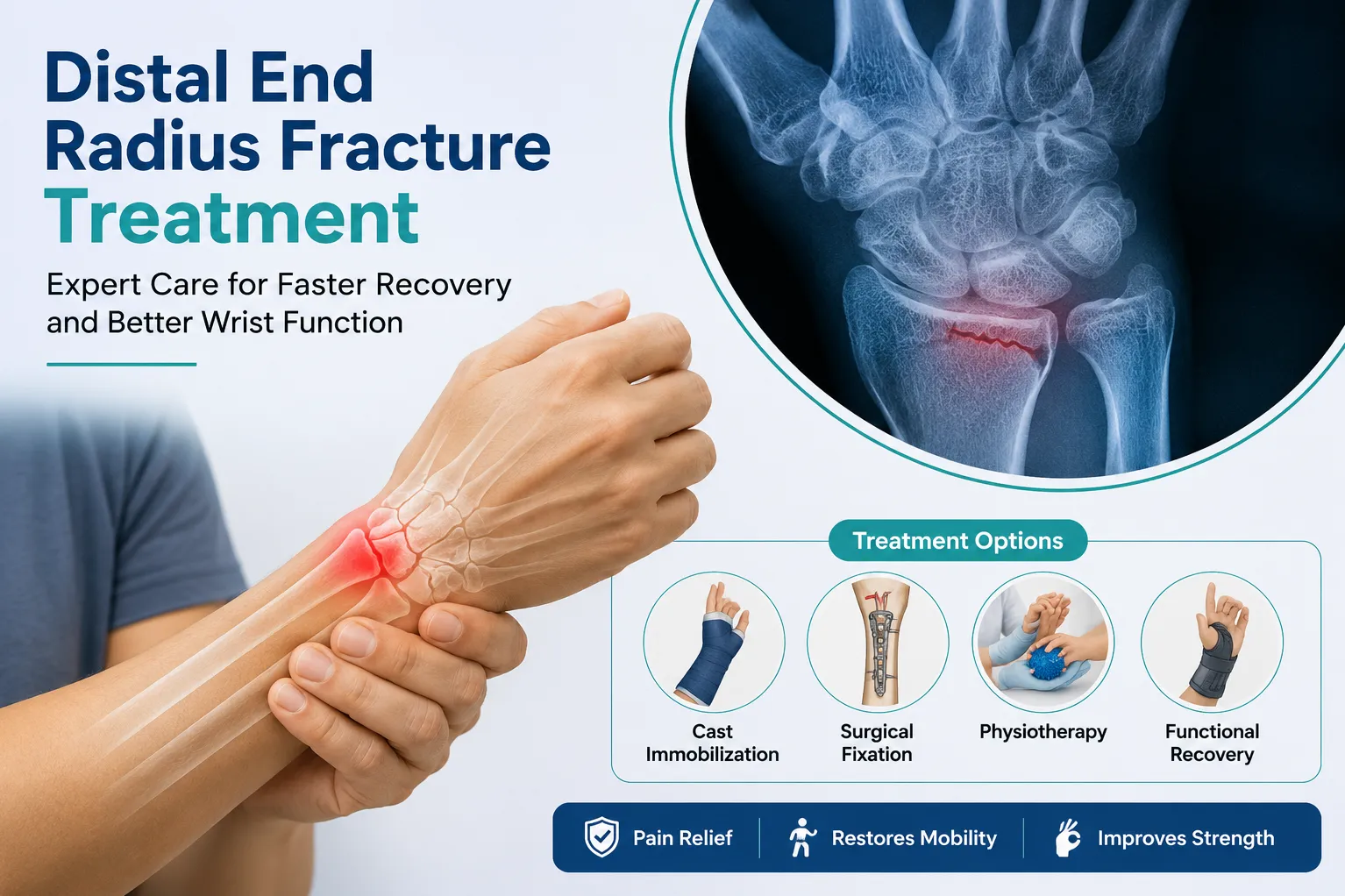
A fall on an outstretched hand may seem like a minor accident, but it can sometimes result in a distal end radius fracture—one of the most common wrist fractures seen in children, adults, and senior citizens. Whether it happens during a road accident, a sports activity, or simply slipping at home, early diagnosis plays a major role in restoring normal wrist function.
People living across Teen Hath Naka, Khopat, Naupada, Kopri, and Thane often continue using an injured wrist, assuming it's just a sprain. However, delaying treatment can affect bone healing, wrist movement, and grip strength.
Understanding a Distal End Radius Fracture
The radius is one of the two bones in your forearm. When the lower end of this bone, close to the wrist, breaks, it is called a distal end radius fracture.
These fractures vary in severity. Some involve a simple crack in the bone, while others may shift out of alignment or extend into the wrist joint. The treatment depends on the fracture pattern, age of the patient, bone quality, and activity level.
How Does This Injury Usually Happen?
Although anyone can experience this fracture, certain situations increase the risk.
Common causes include:
- Slipping on wet floors
- Falling while walking or climbing stairs
- Sports-related injuries
- Motorcycle or car accidents
- Workplace trauma
- Falls among elderly individuals with weaker bones
Older adults, especially those with osteoporosis, are more likely to sustain this injury even after a relatively minor fall.
Signs That Shouldn't Be Ignored
Many wrist fractures are mistaken for simple sprains. While both conditions cause pain, a fracture often produces more noticeable symptoms.
Watch for signs such as:
- Immediate wrist pain after a fall
- Swelling around the wrist
- Difficulty moving the hand
- Reduced grip strength
- Visible deformity
- Bruising around the wrist
- Pain while lifting objects
If these symptoms appear after an injury, an orthopedic assessment should not be delayed.
Why Early Diagnosis Matters
Bones begin healing soon after a fracture occurs. If the broken pieces remain misaligned, they may heal in the wrong position, leading to long-term stiffness, reduced movement, and chronic pain.
At Ankur Hospital, Dr. Amol Gharote performs a detailed clinical examination supported by X-rays to understand the type and severity of the fracture. In certain complex injuries, additional imaging may be recommended to evaluate the wrist joint more accurately.
Early treatment often makes recovery smoother and may reduce the likelihood of future complications.
Treatment Depends on the Type of Fracture
Not every distal radius fracture requires surgery. The treatment plan is based on several factors, including bone alignment and joint involvement.
Non-Surgical Treatment
If the fracture is stable and well aligned, treatment may include:
- Closed reduction, if necessary
- Plaster cast or splint
- Regular follow-up X-rays
- Pain management
- Gradual physiotherapy after healing
Many uncomplicated fractures heal well with appropriate immobilisation and rehabilitation.
Surgical Treatment
Surgery may be advised when:
- The bone is significantly displaced.
- The fracture extends into the joint.
- Multiple bone fragments are present.
- The fracture is unstable.
- Proper alignment cannot be maintained with a cast.
Modern fixation techniques help restore bone alignment while allowing earlier rehabilitation in many cases.
Recovery Doesn't End When the Cast Comes Off
Once the bone heals, attention shifts to restoring normal wrist function.
Rehabilitation usually focuses on:
- Improving wrist flexibility
- Restoring grip strength
- Reducing stiffness
- Regaining hand coordination
- Returning to daily activities safely
Patients who actively participate in physiotherapy often recover movement more effectively than those who avoid exercises due to fear of discomfort.
Everyday Tips During Recovery
Healing takes time, but a few simple precautions can make the process smoother.
- Keep the hand elevated during the first few days if advised.
- Avoid lifting heavy objects until permitted.
- Perform prescribed finger movements while wearing the cast.
- Attend follow-up appointments as scheduled.
- Begin physiotherapy when recommended.
Ignoring these recommendations can slow recovery even after successful fracture treatment.
Getting Back to Everyday Life
Most patients want to know when they can return to work, driving, or sports. The answer depends on the severity of the fracture, the chosen treatment, and individual healing.
During consultations at Ankur Hospital, Dr. Amol Gharote discusses realistic recovery expectations so patients understand each stage of healing rather than rushing back to normal activities too soon.
Whether you live in Teen Hath Naka, Khopat, Kopri, Naupada, Castle Mill, or nearby parts of Thane, seeking timely orthopedic care after a wrist injury can make a significant difference in long-term hand function. What appears to be a minor fall today shouldn't become a lifelong limitation because of delayed diagnosis or incomplete treatment.
Keywords