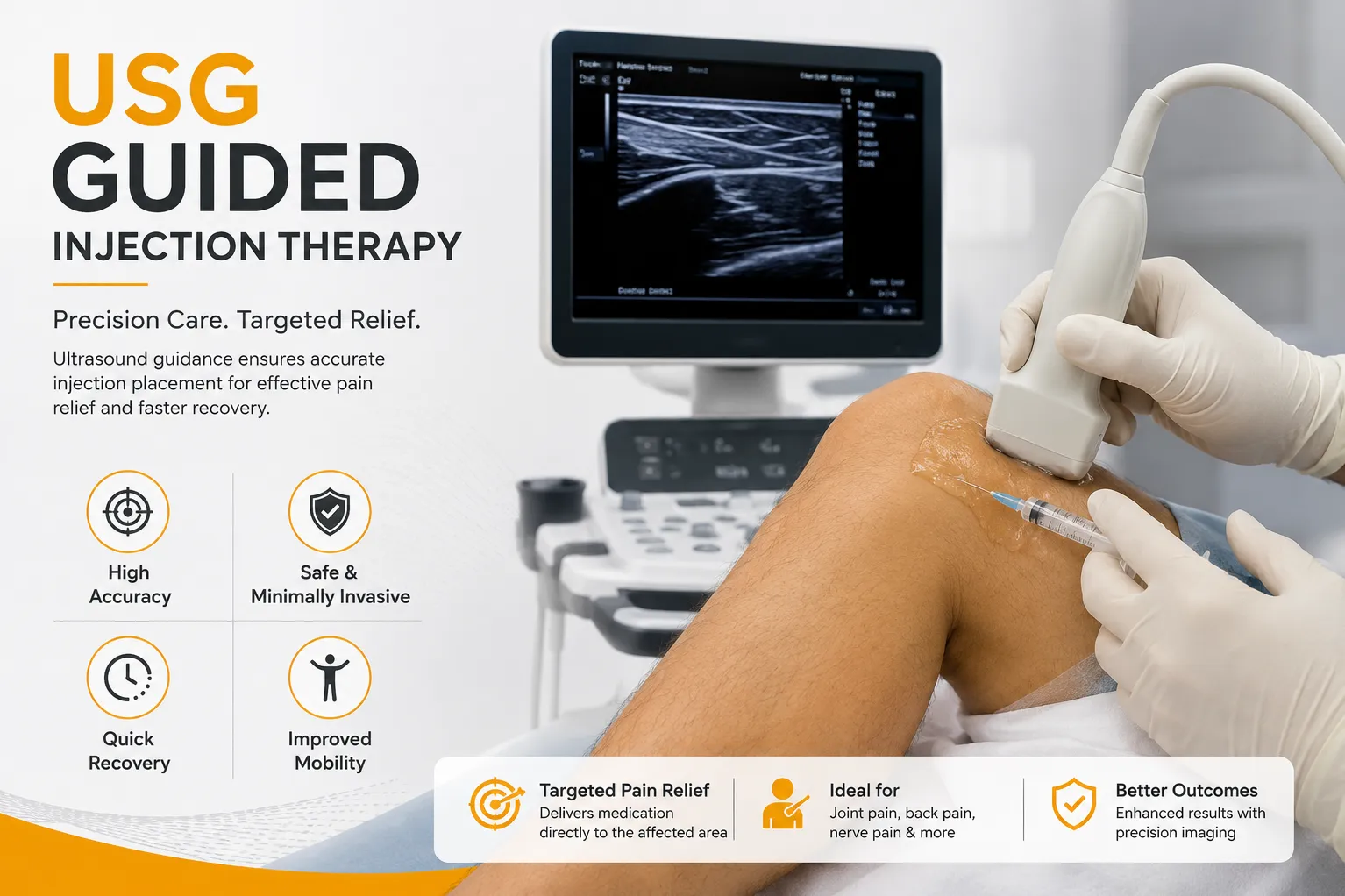
Persistent joint, tendon, or muscle pain can make even the simplest movements uncomfortable. While physiotherapy, medication, and lifestyle modifications help many patients, some conditions continue to cause pain despite these measures. In such situations, USG Guided Injection Therapy has become an effective treatment option because it allows medication to be delivered with greater accuracy.
For people living in Khopat, Thane East, Wagale Estate, Uthalsar, Panchpakhadi, Louise Wadi, and nearby areas of Thane, understanding how this procedure works can help them make informed decisions about managing orthopedic pain without immediately considering surgery.
What Is USG Guided Injection Therapy?
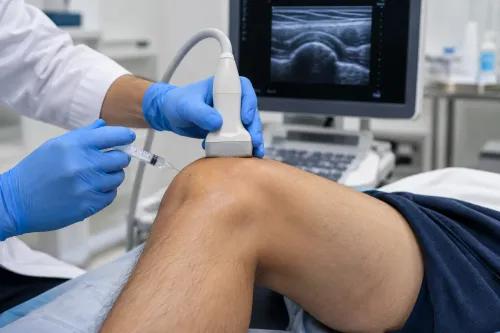
USG (Ultrasound-Guided) Injection Therapy is a procedure where real-time ultrasound imaging helps the orthopedic specialist accurately guide the injection to the affected structure.
Unlike traditional injections that rely on anatomical landmarks, ultrasound allows the doctor to see muscles, tendons, ligaments, bursae, and joints during the procedure. This improves precision and helps ensure that the medication reaches the intended area.
The treatment is commonly used to reduce pain and inflammation while supporting rehabilitation for selected orthopedic conditions.
Which Conditions Can Benefit?
Not every orthopedic problem requires an injection, but several conditions may respond well when conservative treatment alone has not provided adequate relief.
USG Guided Injection Therapy may be considered for:
- Frozen shoulder
- Tennis elbow
- Plantar fasciitis
- Shoulder bursitis
- Rotator cuff tendon inflammation
- Knee arthritis in selected patients
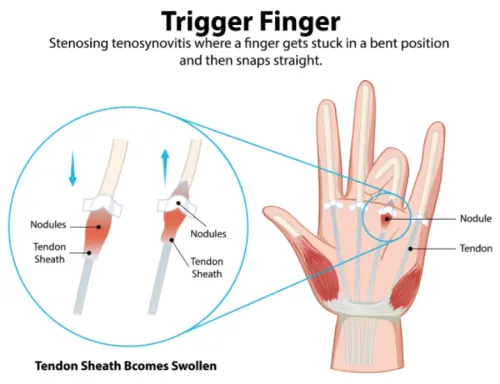
- Trigger finger
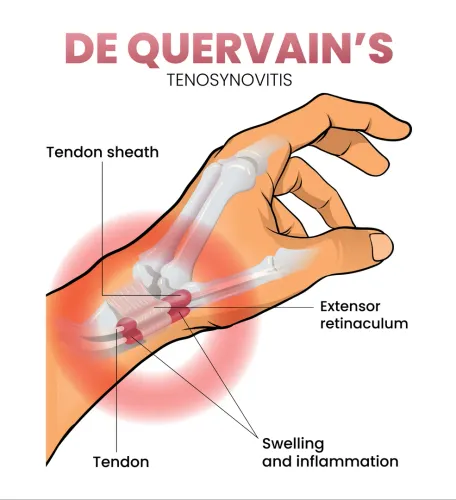
- Certain tendon-related injuries
The decision always depends on a detailed clinical assessment rather than the diagnosis alone.
Why Does Ultrasound Guidance Matter?
One of the biggest advantages of ultrasound guidance is accuracy.
Without imaging, it may be difficult to identify the exact location of inflammation, particularly around small joints or deep soft tissues. Ultrasound provides a live view of the affected area, allowing the needle to be positioned more precisely.
This offers several benefits:
- Improved accuracy of medication delivery
- Better visualisation of tendons and joints
- Reduced risk of injecting nearby healthy structures
- Greater confidence during the procedure
- No exposure to radiation
For many patients, this precision contributes to a more targeted treatment approach.
What Happens During the Procedure?
Many people hesitate because they are unsure what the treatment involves. In reality, the procedure is usually straightforward and performed on an outpatient basis.
A typical appointment includes:
- Clinical assessment of the painful area.
- Ultrasound examination to identify the affected structure.
- Cleaning and preparing the skin.
- Ultrasound-guided placement of the needle.
- Administration of the prescribed medication.
- Short observation before returning home.
The entire process generally takes only a short time, although the exact duration depends on the condition being treated.
Is the Procedure Painful?
Patients often expect the injection itself to be extremely painful. Most describe the discomfort as brief and manageable.
Depending on the condition and medication used, mild soreness may occur for a short period afterwards. Your orthopedic specialist will usually explain what to expect during recovery and whether temporary activity modification is advisable.
Following post-procedure instructions helps maximise the benefits of treatment.
Is an Injection Enough to Solve the Problem?
An important misconception is that an injection alone permanently cures every orthopedic condition.
In reality, injections are often one component of a broader treatment plan.
Depending on the diagnosis, additional treatment may include:
- Physiotherapy
- Stretching exercises
- Strengthening programmes
- Ergonomic advice
- Weight management
- Activity modification
Combining these measures often provides better long-term outcomes than relying on injections alone.
Personalised Treatment Makes the Difference
Not every patient with shoulder, elbow, or heel pain requires injection therapy. Careful evaluation is essential to determine whether the symptoms are caused by inflammation, tendon injury, arthritis, or another orthopedic condition.
At Ankur Hospital, Dr. Amol Gharote performs a detailed examination before deciding whether USG Guided Injection Therapy is the most appropriate option. The focus is always on identifying the underlying cause of pain and recommending treatment that matches the patient's condition, occupation, activity level, and recovery goals.
Seeking Timely Care Can Prevent Long-Term Problems
Persistent orthopedic pain shouldn't become something you simply learn to live with. Whether it's shoulder stiffness, elbow pain while working, or heel pain that affects every step, early evaluation often opens the door to more treatment options before the condition progresses.
Patients from Khopat, Thane East, Wagale Estate, Louise Wadi, Uthalsar, Panchpakhadi, and other parts of Thane frequently seek orthopedic consultation when pain begins interfering with work, exercise, or everyday activities. With timely diagnosis and a personalised treatment plan, many conditions can be managed effectively while helping patients regain comfortable movement and confidence in their daily lives.
Keywords