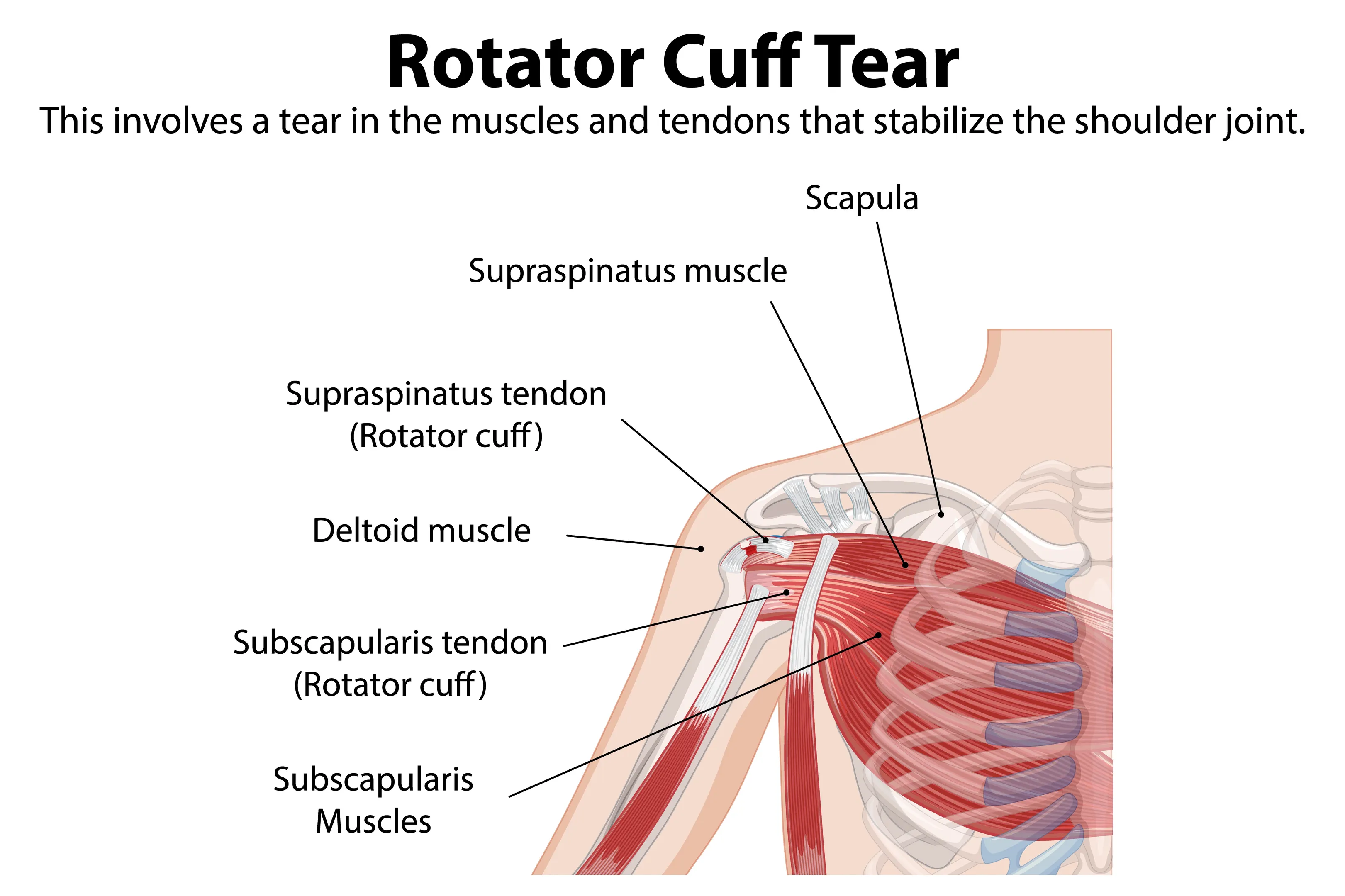
Shoulder pain that refuses to improve isn't always caused by muscle strain or frozen shoulder. In many adults, particularly those who perform repetitive overhead activities or experience a sudden injury, the real problem could be a rotator cuff tear. Since shoulder discomfort can have several causes, understanding the difference is essential before deciding on treatment.
Many patients from Thane Station, Naupada, Teen Hath Naka, Castle Mill, Panchpakhadi, and Kopri visit an orthopedic specialist with one common question: Will physiotherapy be enough, or is surgery the better option? The answer depends on several factors, including the size of the tear, your age, activity level, and how much the injury affects your daily routine.
What Is a Rotator Cuff Tear?
The rotator cuff is a group of four muscles and their tendons that keep the shoulder stable while allowing smooth movement. These tendons help you lift your arm, reach overhead, carry objects, and rotate your shoulder comfortably.
When one or more of these tendons becomes torn—either partially or completely—it can lead to pain, weakness, and limited shoulder function.
Rotator cuff tears generally occur due to:
- Sudden falls or accidents
- Sports injuries
- Repetitive overhead work
- Heavy lifting over many years
- Age-related tendon wear
Although the condition is more common after the age of 40, younger individuals can also develop tears following trauma.
How Can You Tell If It's More Than Just Shoulder Pain?
A simple shoulder strain usually improves with rest. A rotator cuff tear often behaves differently.
Common symptoms include:
- Pain while lifting the arm
- Weakness during overhead movements
- Difficulty sleeping on the affected shoulder
- Clicking or catching sensations
- Reduced range of motion
- Trouble reaching behind the back
- Pain while carrying groceries or lifting everyday objects
Ignoring these symptoms may allow the tear to become larger over time, making treatment more challenging.
Why an Accurate Diagnosis Comes First
Shoulder pain alone doesn't confirm a rotator cuff tear. Several conditions—including frozen shoulder, arthritis, tendon inflammation, and neck-related pain—can produce similar symptoms.
This is why a detailed evaluation is important.
At Ankur Hospital, Dr. Amol Gharote begins with a thorough clinical examination to assess shoulder strength, stability, and movement. Depending on the findings, imaging such as X-rays or MRI may be recommended to determine the location and extent of the tendon injury.
An accurate diagnosis ensures that treatment is based on the actual cause rather than assumptions.
When Physiotherapy May Be the Right Choice
Not every rotator cuff tear requires surgery.
Many patients with partial tears or age-related tendon degeneration respond well to conservative treatment, especially when shoulder strength can still be maintained.
Non-surgical management may include:
- Physiotherapy
- Anti-inflammatory medication
- Activity modification
- Shoulder strengthening exercises
- Posture correction
- Pain management strategies
The goal is to reduce pain, restore movement, and improve shoulder function without surgical intervention whenever possible.
Patients who follow a structured rehabilitation programme often experience gradual improvement over several weeks.
When Surgery Becomes a Better Option
In some situations, delaying surgery may reduce the chances of a successful repair.
Surgical treatment may be recommended when:
- The tendon is completely torn.
- Significant weakness affects daily activities.
- Pain continues despite months of conservative treatment.
- The injury occurred after a major fall or accident.
- The patient has high physical demands due to work or sports.
Every recommendation is made after considering the patient's expectations, lifestyle, occupation, and overall shoulder function.
Recovery Depends on More Than the Procedure
Whether treatment involves physiotherapy or surgery, recovery requires commitment.
Successful rehabilitation usually includes:
- Guided physiotherapy
- Progressive strengthening
- Flexibility exercises
- Gradual return to work
- Regular follow-up assessments
Patients who stay consistent with their rehabilitation often regain better shoulder function and confidence in using the arm for everyday tasks.
Making the Right Treatment Decision
Choosing between physiotherapy and surgery shouldn't be based on online advice or assumptions. Two patients with similar MRI findings may require completely different treatment plans depending on their symptoms and lifestyle.
During consultations at Ankur Hospital, Dr. Amol Gharote discusses all suitable options before recommending a personalised treatment approach. The emphasis is on helping patients understand why a particular plan is appropriate rather than rushing into surgery or avoiding it unnecessarily.
If you're experiencing persistent shoulder pain while living in Thane Station, Naupada, Teen Hath Naka, Castle Mill, Panchpakhadi, Kopri, or nearby parts of Thane, an early orthopedic assessment can help identify the underlying problem and guide you towards the most appropriate treatment before the condition begins affecting your work, sleep, and quality of life.
Keywords